Key points
- Urban biodiversity is a growing challenge as cities keep expanding over the territory.
- Pickett proposes seeing the city as a complex ecosystem where the natural and the built interact.
- Cadenasso studies how urban infrastructure shapes ecological processes and connectivity.
Protecting natural heritage and biodiversity inside cities is a growing challenge as they expand over the territory. Dense and built up as they are, cities can play a key role in conserving biodiversity if they plan and manage their local ecosystems, and they sometimes host more variety of species than the farmland around them. Three ecologists have studied how to integrate and protect nature in urban areas: Steward T. A. Pickett, Mary Cadenasso and Richard Forman.
Pickett: the city is an ecosystem
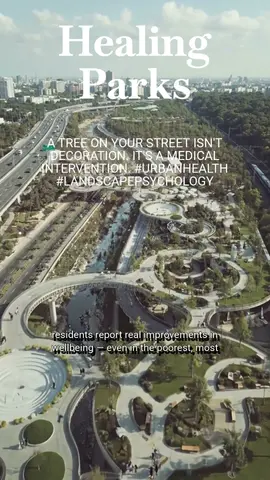
Steward Pickett, an ecologist at the Cary Institute and director of the Baltimore Ecosystem Study, argues that cities should be seen as complex ecosystems in which natural and built components interact without pause: soil, water, trees, animals and people form a single system. Urban ecosystems are not a secondary element of planning but something to be built into design to improve habitability and sustainability. Parks, gardens and green corridors act as biodiversity refuges and also deliver crucial ecosystem services: they purify the air, manage stormwater and regulate the microclimate.
Cadenasso: edges and connectivity
Mary Cadenasso, a regular collaborator of Pickett's, has worked on the relationship between urban infrastructure and ecological processes. Her research highlights ecotones, the transition zones between natural and urbanised areas, which are essential to conserving biodiversity in the city. Those edge areas — linear parks, community gardens, riparian corridors — let plants and animals move and thrive and provide connectivity between habitats. In a fragmented urban landscape, that connectivity is the condition for species to survive in an environment dominated by human activity.
Forman: planning beyond the city
Richard Forman, of Harvard University and one of the founders of landscape ecology, stresses in Urban Regions: Ecology and Planning Beyond the City (2008) the need to integrate ecological principles into large-scale planning. Landscape ecology plans urban space while respecting and conserving the natural patterns of the territory: infrastructure should be designed so as not to interfere with key processes such as species migration or the flow of water. A city that mimics natural processes and respects its surroundings fosters more biodiversity and keeps its natural areas connected and protected.
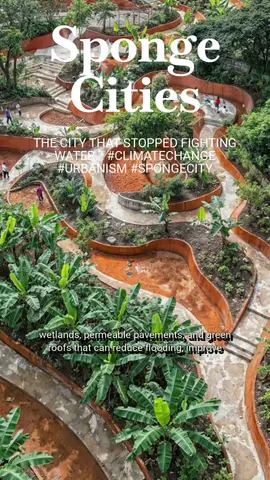
All three agree that preserving urban biodiversity is not about protecting isolated green spaces but about integrating nature into the daily life of inhabitants. That requires policies that promote green infrastructure — green roofs and walls, urban forests, restored wetlands — and that recover ecosystems within the city. The benefits are not only environmental: they improve quality of life with recreational space, cut air and water pollution and strengthen resilience to climate.
Education and participation
A key aspect is education and participation. Cadenasso and Pickett hold that public policy alone cannot guarantee biodiversity conservation: local communities must be involved. Educational programmes that explain why biodiversity matters and encourage participation in ecological restoration projects can drive change, and collaboration between governments, organisations and citizens is essential for solutions to last. Protecting natural heritage in the city demands, in short, an approach that combines urban planning and ecology: cities can be designed to coexist with nature, and doing so is the condition for them to be sustainable and liveable.
Frequently asked questions
Why should the city be understood as an ecosystem?
Because, according to Steward Pickett, its natural and built components interact continuously: soil, water, trees, animals and people form one system. Seeing it that way lets parks, gardens and corridors be managed as biodiversity refuges that also deliver services: cleaner air, stormwater management, microclimate.
What does Richard Forman add to urban planning?
The regional scale. In Urban Regions: Ecology and Planning Beyond the City he argues that biodiversity is not protected by isolated green spaces but by planning that integrates ecological principles — connectivity, edges, habitat mosaics — across the whole urban region.