Key points
- Mitigation cuts emissions and adaptation prepares for impacts; the best measures serve both.
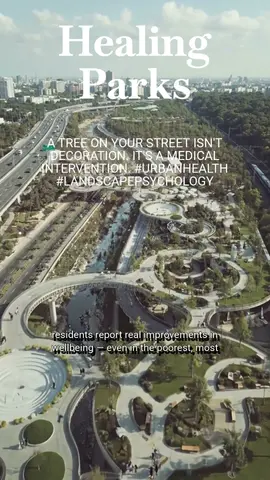
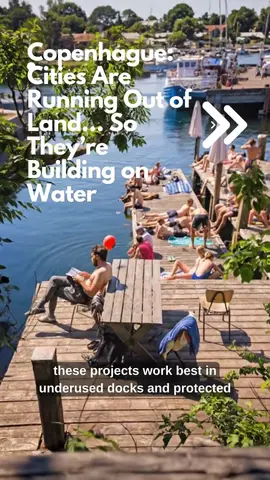
- Copenhagen, Rotterdam and Medellín show that parks, water squares and green corridors cool and drain the city.
- Densifying without a housing policy produces climate gentrification: justice must be built into the strategy.
Cities and climate change are linked in both directions: urban areas generate around 70 percent of energy-related carbon dioxide emissions, according to the Intergovernmental Panel on Climate Change, and at the same time concentrate the population and assets most exposed to heatwaves, floods and sea level rise. That double condition makes urban planning the most effective climate tool governments have, because it decides at once how much is emitted, through transport, buildings and urban form, and how much damage each extreme event causes.
Mitigation and adaptation: the two fronts of urban climate policy
Urban climate policy works on two fronts. Mitigation cuts emissions: energy retrofits of buildings, district heating and cooling, electrification of transport, public transit and active mobility, compactness that shortens trips and renewable energy on rooftops. Adaptation prepares the city for the impacts that can no longer be avoided: shade and water against heat, drainage and floodplains against intense rain, defences and managed retreat against the sea. For years they were handled separately; today the best strategies look for measures that serve both purposes at once.
Green infrastructure: Copenhagen, Rotterdam, Medellín and Toronto
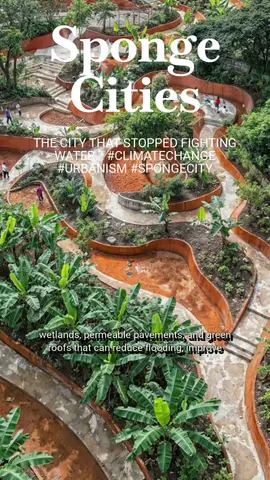
Green infrastructure is the measure that best fulfils that double role. Trees, parks, green roofs and green corridors store carbon, cool the air by several degrees, retain rainwater and improve health. Copenhagen approved a cloudburst plan in 2012 that turns streets and parks into temporary channels and reservoirs. Rotterdam built water squares, such as Benthemplein in 2013, which work as public space when dry and as retention basins in a storm. Medellín planted thirty green corridors from 2016 that lowered local temperatures by more than two degrees. Toronto has required green roofs on new buildings since 2009.
Sustainable mobility and the modal split
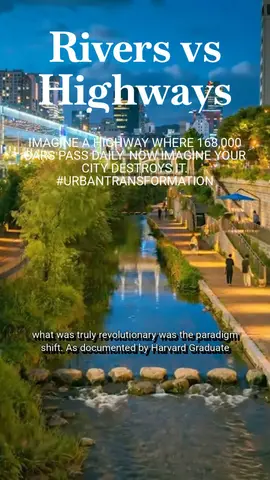
Sustainable mobility is the second pillar. Transport accounts for a quarter to a third of urban emissions, and the solution is not only to change the engine but to change the modal split: less car, more public transport, cycling and walking. Paris has removed traffic lanes and parking to create a continuous cycle network, London has charged cars entering the centre since 2003 and Bogotá moves millions of people a day on bus rapid transit. Each of these measures cuts emissions and, in addition, pollution, noise and crashes, which are immediate health benefits.
Land use, the compact city and climate justice
The third pillar is land-use planning. The compact, mixed city, with housing, jobs and services within walking distance, emits less per resident than the dispersed city, and protecting surrounding farmland and natural land avoids emissions and preserves carbon sinks. But densifying without a housing policy produces climate gentrification: the neighbourhoods that receive parks, transit and retrofits become more expensive and push out the people who suffered most from heat and pollution. That is why just climate strategies build in affordable housing, community participation and priority for the most vulnerable neighbourhoods.
Cities cannot do it alone. They need powers and funding from national governments, metropolitan cooperation on transport and water, and networks such as C40 or the Covenant of Mayors to share solutions. But they are the level at which decisions turn into concrete streets, buildings and trees, and where the benefits are felt first. A city that plans its territory, its mobility and its green space with climate in mind cuts emissions, protects its residents and improves their daily lives in the same move.
Frequently asked questions
What is the difference between climate mitigation and adaptation in cities?
Mitigation cuts emissions through efficient buildings, public transport, active mobility and renewable energy; adaptation prepares the city for unavoidable impacts such as heat, floods or sea level rise with shade, drainage, defences and managed retreat.
What is urban green infrastructure?
It is the network of trees, parks, green roofs, corridors and natural drainage systems that stores carbon, cools the air, retains rain and improves health, serving mitigation and adaptation at the same time.