15-minute city
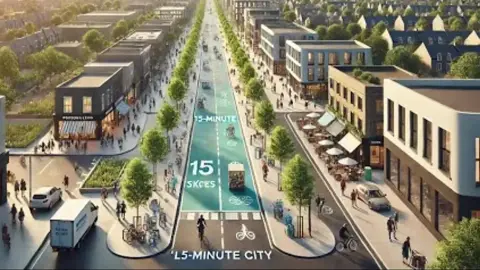
The 15-minute city is an urban model in which work, school, healthcare, shopping and leisure are within a quarter of an hour on foot or by bike from home. Carlos Moreno formulated it in 2016 and Paris adopted it in 2020; its basis is the city of proximity that existed before the car dispersed functions.
It does not propose locking anyone in —the 2023 conspiracy theory misread it— but bringing services closer so that travelling becomes a choice rather than an obligation. Its limits are real: it requires density, viable neighbourhood retail and distributed jobs, conditions that sprawling suburbs lack.
Videos on this term (3)
- Mobility
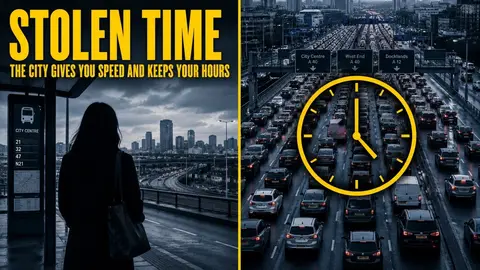
The City Steals Time and Offers Speed: Mobility Versus Accessibility
Mobility measures speed; accessibility measures what you can reach. Induced demand, the one-hour travel budget of…
3 min read - Infrastructure
The 15-Minute City Conspiracy: How Proximity Became a Lockdown
How Carlos Moreno's 15-minute city, a century-old proximity idea, became a conspiracy theory after Oxford's 2023…
3 min read - Urban form
The 15-Minute City: What It Is, How It Works and Its Critics
Carlos Moreno's 15-minute city brings housing, work, services and leisure within a quarter of an hour on foot.
3 min read