Key points
- Moreno reverses functionalist logic: instead of moving people to functions, bring functions to people.
- Sadik-Khan pedestrianised Times Square over a weekend with paint and chairs, measured results and made it permanent.
- Rich neighbourhoods are already 15-minute; bringing the model to poor ones requires investment and housing protection.
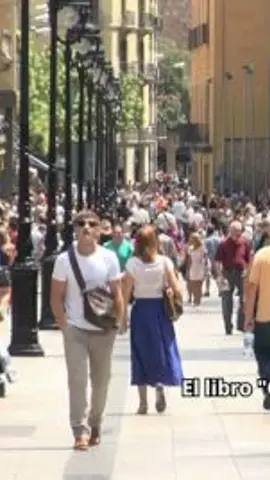
The 15-minute city is the urban model in which every resident can meet their daily needs, living, working, shopping, caring, learning and enjoying, within a quarter of an hour on foot or by bicycle from home. The Franco-Colombian planner Carlos Moreno, a professor at the Sorbonne, formulated it in 2016, and the mayor of Paris Anne Hidalgo made it a governing programme in her 2020 campaign. Behind it lies an old idea, proximity as the basis of urban life, which Jane Jacobs, Jan Gehl and the neighbourhood unit plans of the twentieth century already defended, and a recent practice that Janette Sadik-Khan demonstrated in New York: the street can be redesigned quickly and cheaply if there is political will.
Carlos Moreno and chrono-urbanism: bringing functions to people
Moreno starts from a critique of functionalist planning, which separated the city's functions and forced long trips between them. His proposal, developed in La ville du quart d'heure (2020) and The 15-Minute City (2024), reverses the logic: instead of moving people toward functions, bring functions closer to people. That requires mixed uses in every neighbourhood, enough density to sustain shops and services, streets designed for walking and cycling, and more intense use of what is already built, schools open at weekends, offices converted into housing, rooftops as gardens. Moreno calls it chrono-urbanism: planning people's time, not only space.
Janette Sadik-Khan: redesigning the street fast with paint
Sadik-Khan supplies the practical proof. As New York's transportation commissioner from 2007 to 2013 she pedestrianised Times Square in 2009 with paint, planters and folding chairs over a weekend, created dozens of plazas on leftover junctions, built hundreds of kilometres of protected bike lanes and launched the Citi Bike share system. Her book Streetfight (2016) sums up the method: intervene fast with cheap materials, measure the results and make permanent what works. Her data showed that redesigned streets had fewer crashes and higher retail sales, which disarmed the initial opposition.
From Paris to Melbourne: how the 15-minute city is applied
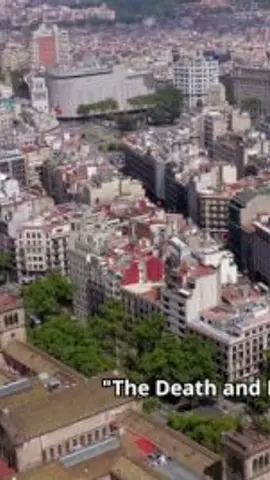
The 15-minute city has spread under different names. Paris has created school streets, turned parking into bike lanes and opened school playgrounds as neighbourhood public space. Melbourne plans 20-minute neighbourhoods, Barcelona applies proximity in its superblocks, Bogotá and Buenos Aires have built it into their plans, and the C40 network adopted it as a post-pandemic recovery strategy, when lockdown showed which neighbourhoods had everything nearby and which did not. The pandemic was the involuntary experiment that turned the concept into a global programme.
Criticisms: equity, peripheries and conspiracy theories
The criticisms are of two kinds. The first concerns equity: in many cities the rich neighbourhoods are already 15-minute and the poor ones are not, and bringing services to the latter requires public investment and protection against the rising values that push out residents; the model also works poorly in dispersed peripheries where density does not sustain local shops. The second is political: since 2023 conspiracy theories have presented the 15-minute city as a plan to confine the population, confusing it with the traffic filters of British neighbourhoods such as Oxford, and several cities have had to publicly defend a concept that only aims to keep the bakery close.
Moreno and Sadik-Khan agree on the essential point: proximity is not nostalgia but the most effective urban policy against emissions, lost time and loneliness, and it is built neighbourhood by neighbourhood with concrete decisions about uses, densities and street space. The 15-minute city is not a radius drawn on a map but a question for every place: what is missing within a quarter of an hour of home, who cannot get there and what must change so that they can.
Frequently asked questions
What is the 15-minute city?
It is the urban model formulated by Carlos Moreno in 2016 in which every resident can live, work, shop, care, learn and enjoy within a quarter of an hour on foot or by bicycle from home, through mixed uses, density and walkable streets.
Why are there conspiracy theories about the 15-minute city?
Because since 2023 some groups confused it with the traffic filters of British neighbourhoods such as Oxford and presented it as a plan to confine the population; the concept only proposes that daily services be close to home.