Walkability
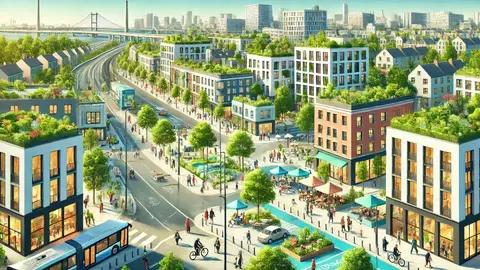
Walkability is the degree to which a place invites people to move on foot: wide, continuous pavements, frequent crossings, street-facing shops, shade, nearby destinations and a sense of safety. It can be scored —Walk Score does— and correlates with health, local retail and housing prices.
Jeff Speck summarised its conditions in four: the walk must be useful, safe, comfortable and interesting. The small-block grid of old cities meets all four without trying; open-block estates with through roads meet none. That is why walkability and urban form are inseparable.
Videos on this term (25)
- Urban geopolitics
How do cities intertwine in a globalized world?
A bus stop brings together strangers, a screen, cables, vehicles, noise and expectations for a few minutes. None of…
3 min read - Housing
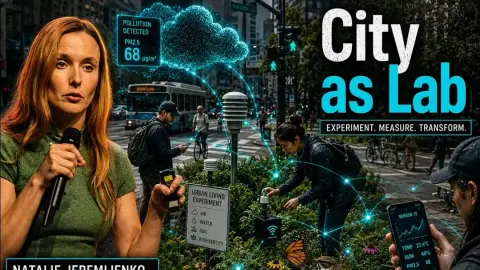
Natalie Jeremijenko: The City as a Participatory Ecology Lab
Natalie Jeremijenko's devices make pollution and urban biodiversity visible so citizens can investigate and act.…
Natalie Jeremijenko 3 min read - Shrinking cities
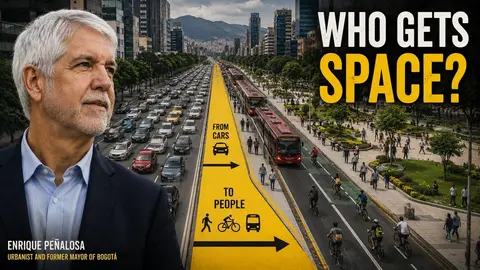
Who Deserves Space in the City? Peñalosa and the Fair Street
Enrique Peñalosa turned the distribution of urban space into a policy of equality: pavements, cycle paths,…
3 min read - Urban economy
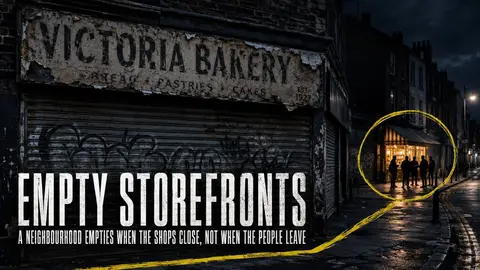
Closed Shutters Close Businesses and Communities: The Ground Floor
Why a street full of homes can feel empty: Jacobs's eyes on the street, Klinenberg's Chicago heatwave, thousands of…
3 min read - Mobility
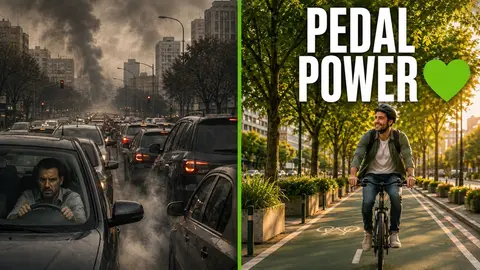
The Bike Improves Your Health and Enhances Your Neighbourhood
Cycling cuts mortality risk, frees street space, lowers noise and pollution and keeps local shops alive.
3 min read - Mobility
Traffic and Fear Kept Our Children Confined at Home
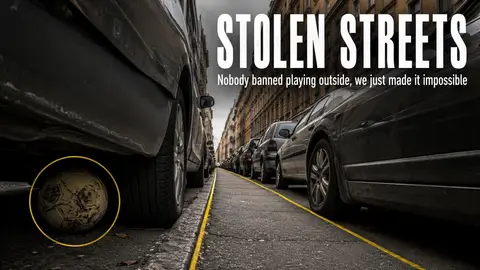
From eight in ten children walking to school alone to one in ten: how the car expelled children from the street,…
3 min read - Urban economy
The Heart Beats at the Last Mile: What Delivery Costs the City
How much city it takes for a parcel to arrive in two hours: sheds on the periphery, ghost supermarkets, more…
3 min read - Public space
Security Through Walls: Protection or Segregation?
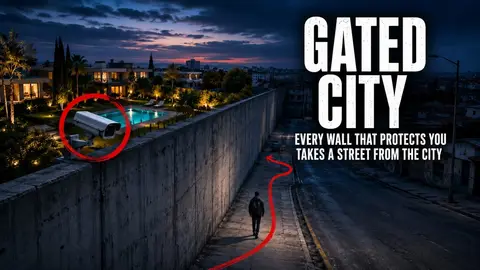
Gated communities privatise surveillance and empty the street. What Caldeira, Low and Sabatini show about fortified…
3 min read - Mobility
Your Free Parking Costs Way More Than You Think: Shoup's Numbers
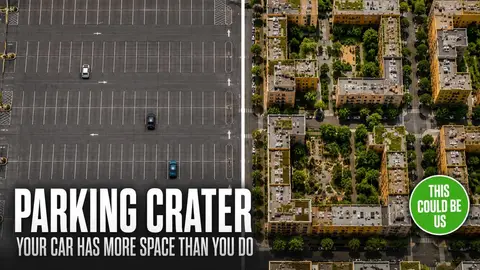
A supermarket lot could hold a hundred homes: Donald Shoup's high cost of free parking, minimums copied from…
3 min read - Urban AI
Who Controls the City When Software Is Privately Owned?
When a company operates a city's sensors and algorithms, the vendor governs: lock-in, algorithmic opacity, the…
3 min read - Urban economy
The House With a Yard That Is Quietly Bankrupting Your City
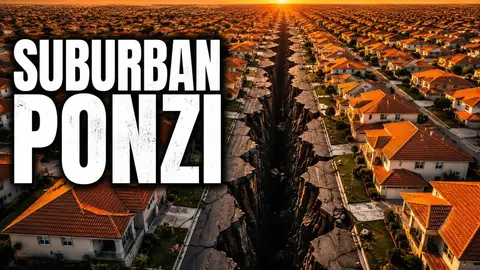
Dispersed detached housing gives municipalities fast revenue and leaves an unpayable maintenance debt: Charles…
3 min read - Public space
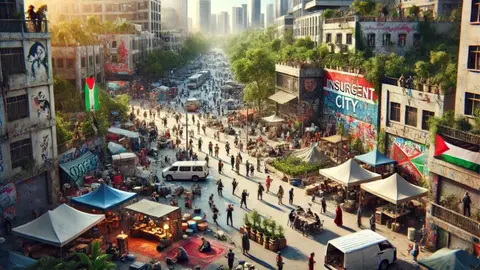
Asef Bayat: Everyday Urban Activism and the Insurgent City
Asef Bayat explains in Life as Politics how the urban poor of the Middle East change the city without organising:…
Asef Bayat 3 min read - Urban psychology
Happy City by Charles Montgomery: Urban Design and Happiness
Happy City (2013) by Charles Montgomery gathers the evidence on which urban design makes us happier: shorter…
2 min read - Public space
Great Streets by Allan Jacobs: What Makes a Street Great
Great Streets (1993) by Allan Jacobs compares the world's best streets at the same scale and draws eight…
Allan Jacobs 3 min read - Public space
Nicholas Blomley: Property, Space and Spatial Justice in the City
Nicholas Blomley shows that property is a spatial practice deciding who may be where. Unsettling the City, Rights…
Nicholas Blomley 3 min read - Urban geopolitics
James Scott: Why the State's Grand Plans Fail
James C. Scott explains in Seeing Like a State why high modernist plans fail: legibility, Le Corbusier, Brasília…
James Scott 2 min read - Urban form
Peter Calthorpe and The Next American Metropolis: The Origin of TOD
The Next American Metropolis (1993) by Peter Calthorpe formulated transit-oriented development against the…
Peter Calthorpe 2 min read - Mobility
Enrique Peñalosa and the Transformation of Bogotá (1998-2000)
Enrique Peñalosa transformed Bogotá between 1998 and 2000 with TransMilenio, cycle paths, pavements and libraries…
3 min read - Mobility
The Right to Mobility: Social Justice in Urban Transport
The right to mobility is the right to get there, not to move. What David Harvey and Susan Handy explain, what…
3 min read - Urban AI
Hybrid Urban Space: Physical and Digital (Castells and Shields)
Hybrid urban space overlays the street and the platform. What Castells's space of flows and Shields's mythology of…
3 min read - Mobility
Shared Mobility in Cities: What Works According to Shaheen and Cervero
Shared mobility cuts cars only if the city governs it. What Susan Shaheen and Robert Cervero measure about car…
3 min read - Urban form
New Urbanism: Duany, Plater-Zyberk and Suburban Nation
What New Urbanism is and what Andrés Duany and Elizabeth Plater-Zyberk propose in Suburban Nation: mixed-use,…
2 min read - Mobility
Urban Congestion: Strategies That Work According to Downs and Jones
Urban congestion is not solved by adding lanes. What Anthony Downs and Peter Jones explain, what congestion pricing…
2 min read - Public space
Inclusive Public Space: Sennett and Low on Participatory Cities
Inclusive public space is the infrastructure of urban democracy. What Richard Sennett and Setha Low explain, two…
3 min read - Urban psychology
Post-Pandemic Cities: How COVID-19 Redefined Urban Space
Post-pandemic cities accelerated tactical urbanism, remote work and awareness of health inequality.
2 min read