Cycling
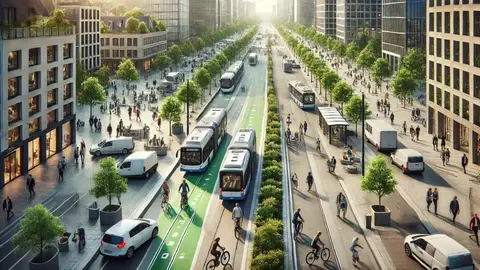
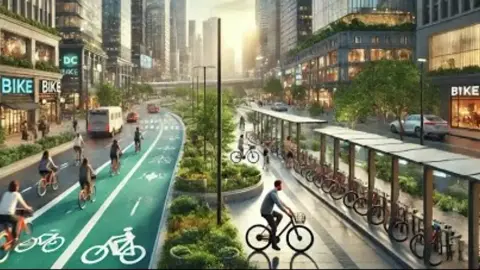
The bicycle is the most efficient vehicle in existence for trips of two to ten kilometres, and its urban use depends almost entirely on one thing: segregated, continuous infrastructure. Where it exists —the Netherlands, Copenhagen, Seville after 2007— modal share rises within a few years; where it does not, it stays at 1%.
The debate is neither cultural nor climatic: Amsterdam was a car city in 1970 and changed by political decision after protests over child deaths. A cycle network is also a health, space and equality policy, because those without a car gain autonomy.
Videos on this term (28)
- Public space
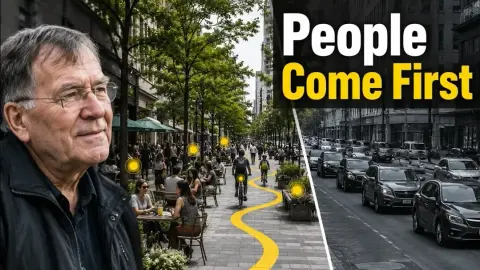
Why Walking Makes Cities Livelier and Safer: Jan Gehl's Evidence
Walking is the basis of public life and safety. What Jan Gehl measured in Cities for People, his twelve quality…
Jan Gehl 3 min read - Shrinking cities
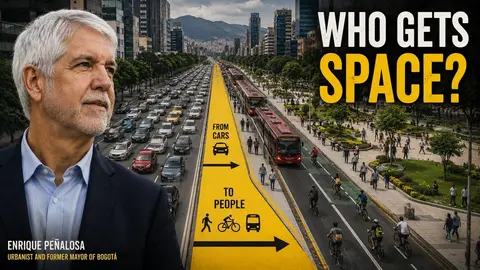
Who Deserves Space in the City? Peñalosa and the Fair Street
Enrique Peñalosa turned the distribution of urban space into a policy of equality: pavements, cycle paths,…
3 min read - Mobility
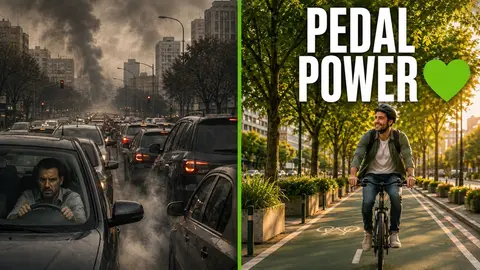
The Bike Improves Your Health and Enhances Your Neighbourhood
Cycling cuts mortality risk, frees street space, lowers noise and pollution and keeps local shops alive.
3 min read - Mobility
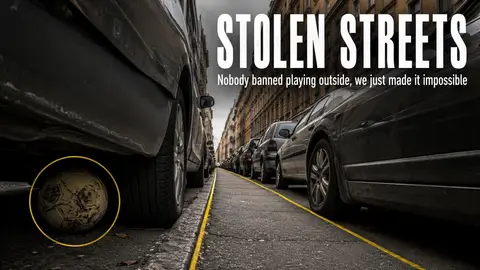
Traffic and Fear Kept Our Children Confined at Home
From eight in ten children walking to school alone to one in ten: how the car expelled children from the street,…
3 min read - Public space
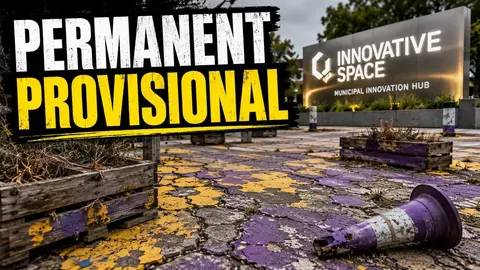
Innovation or Disguised Austerity in Tactical Urbanism?
Tactical urbanism was born as a rehearsal for the permanent and often ends as cuts with colours: Lydon and Garcia,…
3 min read - Public space
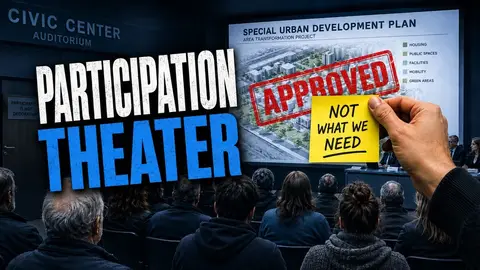
The Participatory Theatre That Deceives Us
When you are invited to participate, are you given power or asked to legitimise? Arnstein's ladder, Spain's Auken…
3 min read - Urban psychology
Juhani Pallasmaa: The Eyes of the Skin and the senses
A summary of Juhani Pallasmaa's The Eyes of the Skin: why modern architecture privileges sight, and what touch,…
Juhani Pallasmaa 2 min read - Urban psychology
Kevin Lynch's The Image of the City: How We Perceive Cities
The Image of the City (1960) by Kevin Lynch explains how we perceive cities through five elements: paths, edges,…
Kevin Lynch 3 min read - Public space
Marc Augé: what non-places are
What non-places are according to Marc Augé: airports, motorways and shopping malls without history or identity,…
Marc Augé 2 min read - Urban psychology
Happy City by Charles Montgomery: Urban Design and Happiness
Happy City (2013) by Charles Montgomery gathers the evidence on which urban design makes us happier: shorter…
2 min read - Public space
Lefebvre: urban space as a field of struggle
In The Production of Space, Lefebvre separates perceived, conceived and lived space, and shows where capital and…
Henri Lefebvre 2 min read - Public space
Sharon Sutton: Social Inclusion and Participation in Urban Planning
Sharon Sutton, a pioneering African American architect, argues for designing with marginalised communities and…
Sharon Sutton 3 min read - Mobility
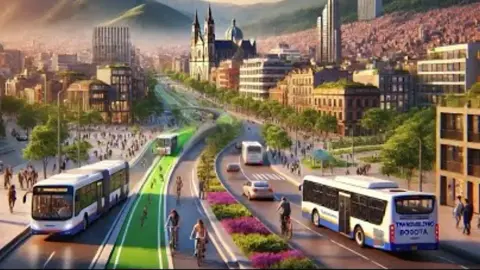
Enrique Peñalosa and the Transformation of Bogotá (1998-2000)
Enrique Peñalosa transformed Bogotá between 1998 and 2000 with TransMilenio, cycle paths, pavements and libraries…
3 min read - Urban ecology
Circular Urbanism: What It Is and How Cities Apply It
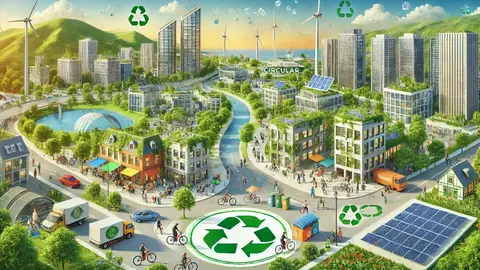
Circular urbanism applies the circular economy to the city: reuse materials, close loops and avoid demolition.…
3 min read - Public space
Tactical urbanism: testing the city before building it
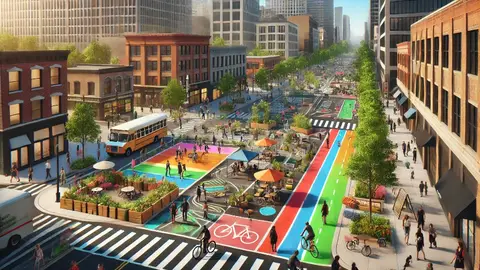
Tactical urbanism tests plazas, bike lanes and pop-up gardens to find out what works on the street before it is…
2 min read - Urban economy
Richard Florida and the Creative Class: What the Evidence Says
How Richard Florida measures the creative class with the three Ts and his indices, how it became fast policy and…
Richard Florida 3 min read - Mobility
Shared Mobility in Cities: What Works According to Shaheen and Cervero
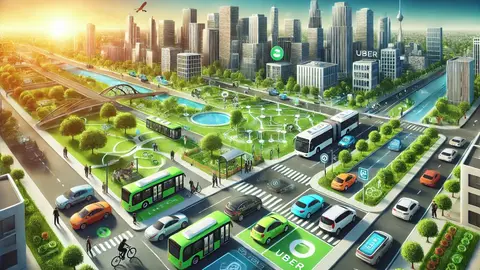
Shared mobility cuts cars only if the city governs it. What Susan Shaheen and Robert Cervero measure about car…
3 min read - Urban AI
Platform Urbanism: How Uber, Airbnb and Deliveroo Change the City
Platform urbanism explains how Uber, Airbnb and Deliveroo reorganise transport, housing, retail and work.
2 min read - Mobility
Parking Policies: Shoup, Willson and Urban Mobility
Parking policies decide how many cars enter the city. What Donald Shoup and Richard Willson propose on minimums and…
3 min read - Urban ecology
Urban Energy Transition: Form, Ecological Footprint and Economy
The urban energy transition needs compact cities, lower consumption and renewables. What Peter Newman, William Rees…
3 min read - Urban ecology
Urban waste management and the circular economy
How cities should manage waste according to Paul Connett (zero waste), Ken Webster (circular economy) and Daniel…
2 min read - Urban form
New Urbanism: Duany, Plater-Zyberk and Suburban Nation
What New Urbanism is and what Andrés Duany and Elizabeth Plater-Zyberk propose in Suburban Nation: mixed-use,…
2 min read - Urban form
The 15-Minute City: What It Is, How It Works and Its Critics
Carlos Moreno's 15-minute city brings housing, work, services and leisure within a quarter of an hour on foot.
3 min read - Urban ecology
Circular Economy in Cities: What It Is, Cases and Limits
The circular economy keeps materials and products in use instead of discarding them. What Walter Stahel, Ken…
3 min read - Mobility
Sustainable mobility: Newman, Banister and Kenworthy
What sustainable mobility means for Peter Newman, David Banister and Jeff Kenworthy: car dependence, density,…
2 min read - Mobility
Urban Cycling: What Makes a City Cycle According to Pucher and Buehler
Urban cycling depends on infrastructure and policy, not climate or culture. What John Pucher and Ralph Buehler…
3 min read - Urban AI
Industry 4.0 and Cities: How It Transforms Urban Mobility
Industry 4.0 brings sensors, artificial intelligence and electromobility to the city. What changes in transport,…
3 min read - Urban psychology
Post-Pandemic Cities: How COVID-19 Redefined Urban Space
Post-pandemic cities accelerated tactical urbanism, remote work and awareness of health inequality.
2 min read