Key points
- Harvey explains reconversion as entrepreneurial urbanism: flagship projects with public risk and private profit.
- Moretti shows that each technology job creates five local jobs and that cities diverge ever further.
- Bilbao and the Ruhr prospered through two decades of sustained public investment, not just a museum.
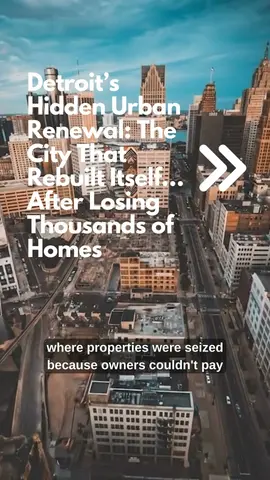
Postindustrial cities are those that lost their manufacturing base between the 1970s and the 1990s and had to rebuild their economies on services, knowledge, culture and finance. Detroit, Manchester, Bilbao, Pittsburgh and the Ruhr share the same starting point: closed factories, destroyed jobs, departing population and abandoned industrial land. Three authors explain from different angles how that transition happened and why its results are so uneven: the geographer David Harvey, the planning theorist John Friedmann and the economist Enrico Moretti.
David Harvey and the entrepreneurial city after deindustrialisation
Harvey, in Spaces of Global Capitalism (2006), places deindustrialisation within the logic of capital: when production stops being profitable in the old industrial regions, it moves to places with cheaper labour and less regulation, and the cities left behind must compete with one another to attract investment. That competition produces the entrepreneurial urbanism Harvey had already described in 1989: public-private partnerships, flagship projects, tax incentives and city marketing. The museum, the stadium or the financial district replaces the factory as a symbol, but risk is socialised and profit is privatised.
John Friedmann and planning the reconversion
Friedmann, in Planning in the Public Domain (1987), argues that reconversion cannot be left to the market. Planning, understood as the link between knowledge and public action, must decide which sectors to promote, what training to offer displaced workers and how to maintain social cohesion while the economic base changes. His idea of radical planning, built from the affected communities rather than only from offices, anticipates the just transition strategies now applied to decarbonisation: nobody should bear alone the cost of a transformation that benefits everyone.
Enrico Moretti and the new geography of jobs
Moretti, in The New Geography of Jobs (2012), supplies the data. Since 1980 American cities have split into three groups: those that attracted innovation, such as San Francisco, Boston and Seattle, those that kept declining, such as Flint and Cleveland, and a large majority in between. The difference is explained by human capital: each skilled technology job generates five local service jobs, from waiters to lawyers, and wages for everyone, including the least educated, are higher in innovative cities. Moretti calls this the Great Divergence and warns that it feeds on itself.
Bilbao, the Ruhr and Manchester: three reconversions
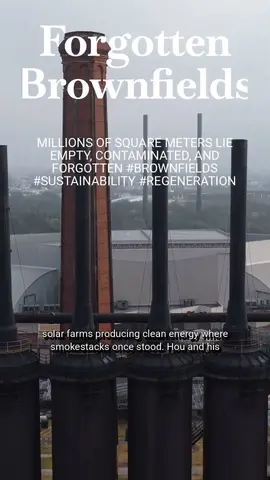
The European cases show different paths. Bilbao combined the clean-up of its river, Norman Foster's metro and the 1997 Guggenheim with sustained public investment over two decades, and its per capita income now exceeds the Spanish average. The Ruhr turned mines and steelworks into parks, universities and cultural venues through the IBA Emscher Park between 1989 and 1999, without a single iconic building. Manchester bet on universities and services, but its northern neighbourhoods remain among the poorest in the United Kingdom. No recipe works without capable institutions and decades of persistence.
The joint lesson of Harvey, Friedmann and Moretti is that the postindustrial city can prosper, but it rarely does so for everyone. Technology and financial districts concentrate wealth and push up housing costs, while former working-class neighbourhoods lose jobs and services. A successful transition requires combining the attraction of talent and investment with training for displaced workers, affordable housing in the areas that gain value, support for small business and genuine community participation in decisions. Anything less produces cities that shine on the outside and are divided within.
Frequently asked questions
What is a postindustrial city?
It is a city that lost its manufacturing base between the 1970s and 1990s and rebuilt its economy on services, knowledge, culture and finance, such as Bilbao, Pittsburgh, Manchester or the Ruhr.
What is Enrico Moretti's Great Divergence?
It is the growing gap between cities that attract innovation and human capital, where everyone's wages rise, and cities that keep losing jobs; the multiplier effect of skilled jobs reinforces it.