Key points
- Kitchin: data are not neutral and the real-time city privileges the traffic jam over inequality.
- Jasanoff: knowing the city through sensors means governing it as a system to optimise; through assemblies, as a community.
- Toronto cancelled Sidewalk Labs over data sovereignty; Barcelona bet on Decidim, open source and public data.
Urban technopolitics is the set of decisions about which data a city collects, who owns them, which algorithms process them and what is decided with them, and it has become the terrain on which twenty-first-century urban governance is contested. Two authors help us understand it: the Irish geographer Rob Kitchin, who in The Data Revolution (2014) and his work on the real-time city analysed the smart city as a data regime, and the sociologist of science Sheila Jasanoff, of Harvard, whose theory of co-production shows that technical knowledge and political order are produced together. Both agree that technology does not govern the city: those who design and control it do.
Rob Kitchin: the city governed by the dashboard
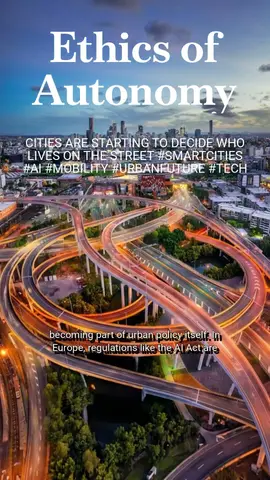
Kitchin starts from the smart city as companies sell it: sensors in traffic lights, meters and cameras, platforms that integrate the data and dashboards from which municipal government optimises traffic, energy, waste and security. His critique is threefold. Data are not neutral: what is measured, how and with which categories embeds decisions that favour some uses and some users. Real-time management privileges the measurable and the immediate over the structural, the traffic jam over inequality. And the data infrastructure usually belongs to private vendors, IBM, Cisco, Siemens, Alphabet, which turns urban governance into technological dependence. Kitchin calls this the city governed by the dashboard.
Sheila Jasanoff: co-production and sociotechnical imaginaries
Jasanoff supplies the wider frame. Her idea of co-production holds that ways of knowing the world and ways of governing it constitute each other: a city known through sensor data is governed as a system to be optimised, and one known through assemblies and stories is governed as a community to deliberate. Her concept of sociotechnical imaginaries, developed with Sang-Hyun Kim, describes the collective visions of the future that drive technologies, the smart city, the sustainable city, and that decide what gets funded and what counts as progress. Jasanoff asks that those imaginaries be submitted to democratic deliberation rather than imposed as technical destiny.
Toronto versus Barcelona: two models of data sovereignty
The cases show the dispute. Sidewalk Labs, a subsidiary of Alphabet, proposed in 2017 to build a smart district in Toronto with sensors on every surface and a private entity managing the data; neighbourhood opposition over privacy and data sovereignty, and the lack of answers about who would own the data, led to cancellation in 2020. Barcelona, by contrast, bet from 2016 on technological sovereignty: the open-source participation platform Decidim, data as a public good, municipal ownership clauses in contracts and the European DECODE project so that citizens control their data. Amsterdam and Helsinki have created public registers of the algorithms they use.
Algorithms, bias and the conditions for democratic technopolitics
Technopolitics also has a dimension of everyday power. The algorithms that assign patrols, prioritise repairs or detect fraud in social benefits take decisions about neighbourhoods and people with biases inherited from historical data, and with no possibility of appeal when nobody can explain why the system decided. Kitchin and Jasanoff demand the same from different disciplines: transparency about which algorithms operate, evaluation of their effects on vulnerable groups, participation in their design and public technical capacity so as not to depend on private black boxes.
The lesson for urban governance is that technology is a political decision disguised as a technical solution. A city that buys a dashboard also buys a way of knowing and governing itself, and whoever controls the data controls part of the city. Kitchin and Jasanoff invite us to ask, before every sensor and every algorithm, which imaginary drives it, who owns it, whom it benefits and how citizens can debate it. That question is technopolitics, and it decides whether the smart city is a more democratic city or merely a more surveilled one.
Frequently asked questions
What is urban technopolitics?
It is the set of decisions about which data a city collects, who owns them, which algorithms process them and what is decided with them; according to Kitchin and Jasanoff, technology does not govern the city, those who design and control it do.
What is co-production according to Sheila Jasanoff?
It is the idea that ways of knowing the world and ways of governing it constitute each other: a city known through sensor data is governed as a system to optimise, and one known through deliberation is governed as a community.