Key points
- Habitat fragmentation by roads and subdivisions harms biodiversity more than the loss of area itself.
- Residents of compact neighbourhoods drive 20 to 40 percent less than those of dispersed suburbs.
- Compact does not mean skyscrapers: medium density, mixed uses, frequent transit and accessible green space.
Territorial planning is the ordering of land use at the scale of the city, the metropolitan area or the region: it decides where to build, where to conserve and how to connect the two. Its main contemporary adversary is urban sprawl, the dispersed expansion that consumes farmland and natural land, forces dependence on the car and multiplies the cost of infrastructure. Three authors from different disciplines agree on the answer: the landscape ecologist Richard T. T. Forman, the planner Reid Ewing and the economist Edward Glaeser defend compact cities, with public transport and protected natural areas, as the most sustainable way to grow.
Richard Forman and the ecology of urban regions
Forman, a professor at Harvard and founder of landscape ecology, analysed in Land Mosaics (1995) and Urban Regions: Ecology and Planning Beyond the City (2008) how the urban footprint fragments habitats. Every road and every isolated subdivision cuts corridors along which species, water and nutrients move, and fragmentation reduces biodiversity more than the total loss of area does. His proposal is to plan the whole region, not just the city: keep a matrix of natural and agricultural land connected by corridors, concentrate urbanisation in nodes and treat urban edges as designed transition zones rather than advancing fronts.
Reid Ewing, Growing Cooler and the climate cost of sprawl
Ewing coordinated Growing Cooler: The Evidence on Urban Development and Climate Change (2008), an Urban Land Institute report that gathered the evidence on urban form and emissions. Its conclusion is that residents of compact, mixed-use neighbourhoods drive 20 to 40 percent less than those of dispersed suburbs, and that no improvement in vehicle technology offsets the growth in miles driven if the city keeps spreading. Ewing is also the author of the most widely used sprawl indices in the United States, which link dispersion to more obesity, more traffic deaths and less social mobility.
Edward Glaeser and the economic triumph of the dense city
Glaeser, an economist at Harvard, argues in Triumph of the City (2011) that density is humanity's greatest invention: it brings people together, speeds the exchange of ideas and raises productivity and wages. He adds that the dense city is also the greenest, because a Manhattan resident emits far less carbon than one in the suburbs of Houston thanks to smaller homes, public transport and less driving. His critique targets the regulation that prevents building upward in the most productive cities, which pushes growth toward dispersed peripheries and toward hot regions where air conditioning sends energy consumption soaring.
Compact city, growth boundaries and transport
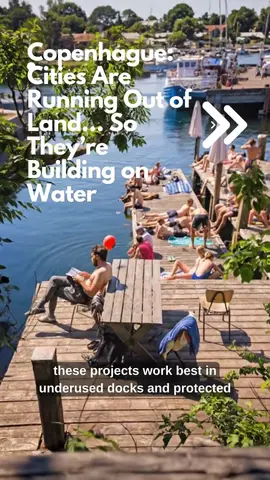
All three agree that compact does not mean skyscrapers but medium-density neighbourhoods with housing, jobs, shops and schools within walking distance and served by frequent public transport. The tools are well known: urban growth boundaries such as Portland's since 1979, green belts such as London's, priority for regenerating already urbanised land, transit-oriented development around stations and taxation that makes sprawl pay for the infrastructure it demands. Copenhagen has planned its growth since 1947 along rail fingers with green wedges between them, and it remains the most cited model.
Sustainable territorial planning has its tensions too. Limiting developable land without building enough housing inside the city drives up prices and pushes out lower incomes, as Glaeser warns; densifying without public space and nearby nature harms health and biodiversity, as Forman reminds us. The answer Ewing summarises is to grow inward with quality: more housing in well-connected neighbourhoods, more accessible green space and fewer miles driven. That combination cuts emissions, protects the territory and makes the city fairer.
Frequently asked questions
What is urban sprawl?
It is the growth of the city through low-density subdivisions separated from its centres, which consumes farmland and natural land, forces car use for everything and multiplies infrastructure costs and emissions.
Why is the dense city more sustainable according to Glaeser?
Because a resident of a compact city emits far less carbon thanks to smaller homes, public transport and fewer miles driven, and proximity also raises productivity and the exchange of ideas.