The re-naturalization of urban rivers has gained increasing attention in recent decades as a strategy to restore waterways to a more natural state and reverse the negative impacts of infrastructure built over them. This approach is considered both an ecological and urban solution, as it seeks to restore biodiversity while improving cities’ capacity to cope with climate-related risks such as flooding. Scholars such as Erik Swyngedouw and Maria Kaika have studied this phenomenon, analyzing its environmental, social, and political implications in urban contexts. Swyngedouw, through his research on urban metabolism and water management, argues that the re-naturalization of urban rivers responds to the problems generated by intensive urbanization.
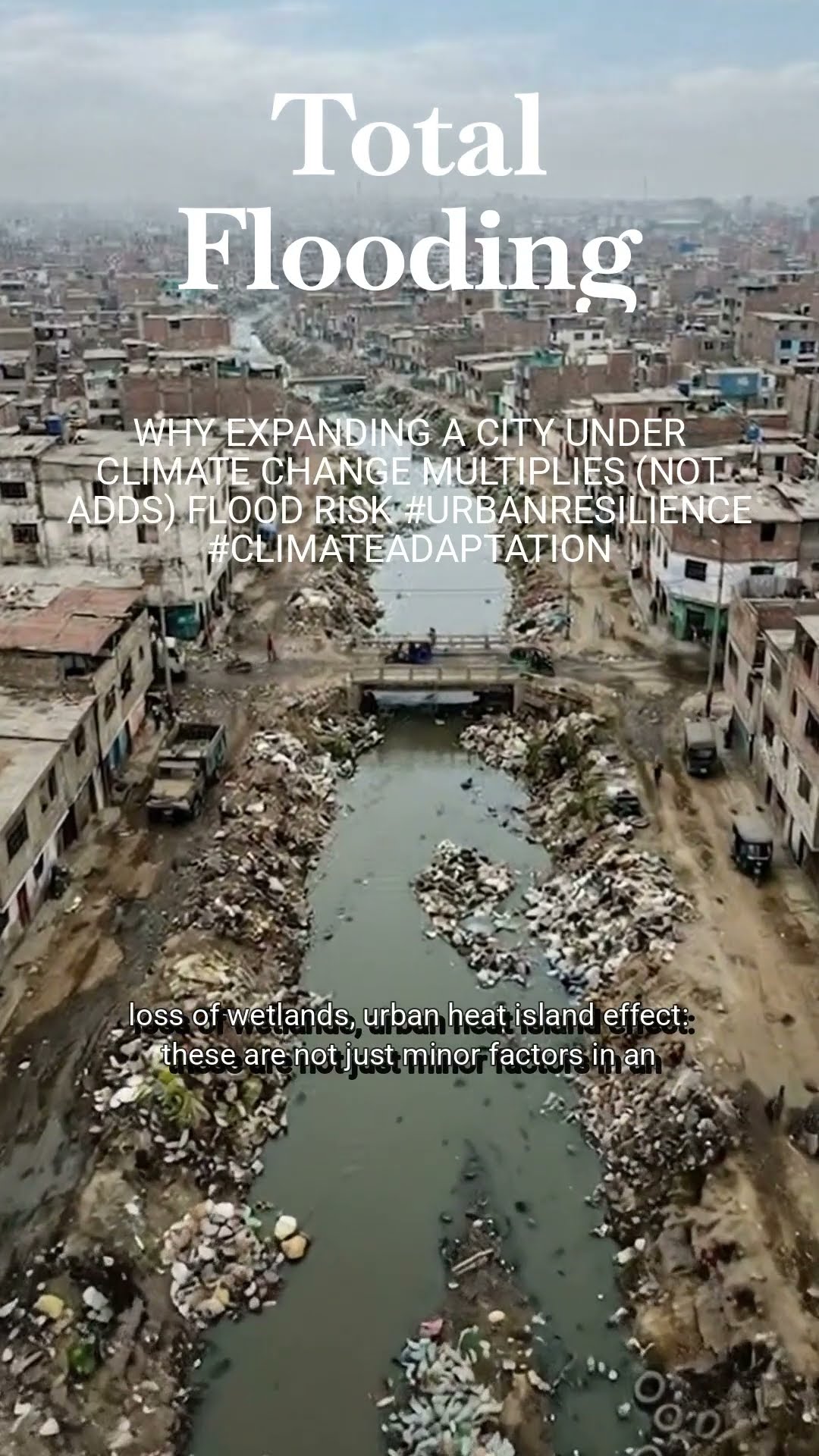
In many cities, rivers have been channelized, covered, or heavily engineered to facilitate urban expansion. According to Swyngedouw, these interventions reduce rivers’ natural capacity to absorb and regulate stormwater, increasing the risk of urban flooding. At the same time, the destruction of river ecosystems negatively affects local biodiversity by eliminating habitats that support a wide range of species. Kaika, in her book City of Flows, examines how modern infrastructures designed to control rivers have disconnected citizens from natural processes, producing urban environments that ignore hydrological cycles.
She argues that river re-naturalization is not only a technical intervention but also a symbolic one, aimed at re-establishing the relationship between cities and rivers and restoring public access to these natural spaces. This reconnection improves environmental quality while also providing recreational and educational spaces that encourage public awareness about water resources. Both authors agree that restoring urban rivers can be an important tool for climate change adaptation. Swyngedouw emphasizes that restoring natural riverbeds enhances the ability of rivers to manage high flows, reducing flood risks in densely populated urban areas.
Removing rigid infrastructures such as levees and concrete channels allows rivers to recover their natural capacity to retain and distribute water. Kaika complements this perspective by noting that restored vegetation along riverbanks can help mitigate the urban heat island effect, improving the microclimate of cities. However, both scholars also highlight the social and political challenges associated with these projects. Swyngedouw notes that river restoration initiatives often generate conflicts among stakeholders, including real estate developers, local governments, and nearby communities.
Decisions about where and how these projects are implemented frequently reflect existing power dynamics and may overlook the needs of vulnerable populations. Kaika further warns that, if poorly managed, re-naturalization can trigger gentrification, as improved environmental amenities increase nearby property values and may lead to the displacement of low-income residents. Despite these challenges, Swyngedouw and Kaika agree that the re-naturalization of urban rivers represents a crucial step toward building more sustainable and resilient cities. For these initiatives to succeed, both emphasize the importance of participatory approaches that involve all stakeholders and ensure that environmental and social benefits are distributed equitably.
They also stress the need for regulatory frameworks that support long-term planning and recognize urban rivers not merely as economic resources but as essential commons for collective well-being. In conclusion, the re-naturalization of urban rivers is a complex process that requires integrating ecological, social, and political considerations. As Swyngedouw and Kaika demonstrate, restoring urban waterways can enhance biodiversity, reduce flood risks, and create opportunities to redesign cities in ways that are more equitable and better connected to nature. The success of these projects ultimately depends on collaboration among different actors and the implementation of inclusive policies that ensure their benefits reach all residents.
🌿🌊🏙️