Key points
- Urban political ecology understands the city's environmental problems as political questions, not technical ones.
- Swyngedouw: urban water is produced and commodified; Kaika: infrastructures hide the nature that feeds them.
- Heynen: the urban forest and greenery are distributed by income and race; nothing in urban nature is apolitical.
Urban political ecology is the field that studies how power, urban policy and structural inequality decide who in the city has access to natural resources — water, air, greenery — and who does not. It challenges the idea that urban environmental problems are technical questions and understands them as political ones: nature in the city is produced, distributed and contested. Three authors have been fundamental to its development: Erik Swyngedouw, Maria Kaika and Nik Heynen, and all three show that the unequal distribution of urban nature reflects and reinforces power relations.
Swyngedouw: water as commodity
Erik Swyngedouw, in Social Power and the Urbanization of Water (2004), studies through the case of Guayaquil how water, essential to urban life, is managed and distributed unequally according to power relations and economic interests. Far from being a common good accessible to all, urban water is treated as a commodity subject to privatisation and commercialisation; infrastructure benefits elites above all, while poor sectors buy water from tanker trucks at far higher prices. For Swyngedouw that situation does not answer to natural scarcity but to a management system designed to favour some groups at the expense of others.
Kaika: infrastructure that hides nature
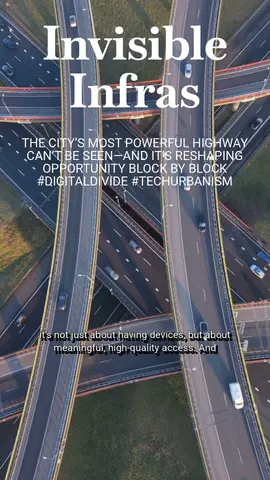
Maria Kaika complements that analysis in City of Flows (2005) by studying how water and energy networks are woven into the social and ecological dynamics of the city. The modernisation and expansion of those infrastructures transformed nature and also social relations and the way citizens relate to their surroundings: dams and pipes hid nature beneath the city and produced the illusion of a city separate from it. Urban policy tends to prioritise economic development and real estate expansion over the protection of resources, and urbanisation becomes a process that consumes nature while worsening inequality of access to it.
Heynen: environmental justice and the urban forest
Nik Heynen, in his work on environmental justice, shows how the most vulnerable communities — ethnic minorities and working classes — are the most affected by environmental degradation. His studies of Milwaukee's urban forest demonstrate that trees and green space are deeply unequally distributed: affluent neighbourhoods enjoy better environmental conditions while marginalised communities bear more pollution and lack parks. Those problems are not only ecological: they are the result of urban policies that reproduce existing social inequality.
Nothing is apolitical
The central point of urban political ecology is that the city's environmental problems are neither neutral nor apolitical. Swyngedouw, Kaika and Heynen agree that policy and planning answer to political and economic interests that prioritise some groups over others, and that unequal distribution of environmental resources and benefits produces environmental injustice: the most disadvantaged communities are the most exposed to risk and have the least access to nature.
Hence all three hold that urban environmental problems cannot be solved without attacking the structural causes of inequality. For cities to be sustainable and just, the way natural resources are managed and distributed must be rethought, guaranteeing that every citizen, whatever their class, ethnicity or neighbourhood, has equitable access to water, clean air and green space. Urban political ecology shows that environmental policy does not only distribute nature: it distributes power.
Frequently asked questions
What is urban political ecology?
The field that studies how power, urban policy and structural inequality decide who in the city has access to natural resources, water, air and greenery, and who does not, understanding urban nature as something produced, distributed and contested.
What do Swyngedouw, Kaika and Heynen contribute?
Swyngedouw shows how water becomes a commodity and an instrument of power, Kaika how modern infrastructures hide the natural flows they depend on, and Heynen how the urban forest and environmental justice are unequally distributed between neighbourhoods.