Key points
- Zukin: artists gave value to SoHo's lofts and were the first displaced when capital arrived.
- Smith: industrial land offers the widest rent gap, so capital flows toward it as toward a frontier.
- Public cultural reuse, as at Zollverein or Matadero, can avoid displacement if the land stays public.
The reuse of industrial land is the conversion of factories, warehouses, docks and railways abandoned by deindustrialisation into housing, offices, cultural facilities and parks, and since the 1970s it has been one of the main sources of transformation in Northern cities. Two authors explained its mechanisms and costs: Sharon Zukin, who in Loft Living (1982) studied how the lofts of New York's SoHo went from workshops to artists' homes and then to luxury apartments, and Neil Smith, who in The New Urban Frontier (1996) showed that devalued industrial land is the raw material of gentrification because it offers the widest gap between current and potential rent.
The physical legacy of deindustrialisation: sheds, docks and rails
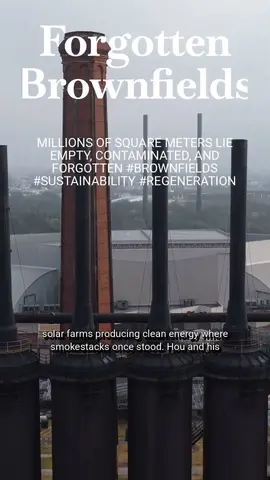
Deindustrialisation left an immense physical legacy. Between 1970 and 1990, cities such as New York, London, Manchester, Detroit or Bilbao lost most of their manufacturing employment, and with it millions of square metres of sheds, wharves and depots fell empty, often in central locations beside rivers and stations. That land, contaminated and unused, sank the values of the working-class neighbourhoods around it, and its recovery became the great planning operation of the century's end: Docklands in London, Baltimore's Inner Harbor, Battery Park City in New York, Abandoibarra in Bilbao.
Sharon Zukin: Loft Living and the artistic mode of production
Zukin documented the first cycle. In the SoHo of the 1960s and 1970s, artists without means illegally occupied cheap industrial lofts because they offered space and light; the city legalised residential use in 1971 and the press turned the district into an emblem of creative life; developers followed, prices multiplied and the artists themselves were displaced by professionals and galleries. Zukin called that mechanism the artistic mode of production: culture turns industrial space into real estate product, and the pioneers who give it value are the first to lose it.
Neil Smith: the rent gap and industrial land as frontier
Smith supplied the theory. His notion of the rent gap explains why industrial land is so attractive: its current rent is almost nil and its potential rent, once rezoned and connected to the centre, very high, so capital flows toward those zones as toward a frontier to conquer. Public policy, he notes, prepares that conquest with decontamination, infrastructure, rezoning and tax exemptions, and the result is that reuse benefits owners and developers while residents of adjacent working-class neighbourhoods suffer rising prices and displacement.
Tate Modern, High Line, Zollverein and Matadero: variants of the pattern
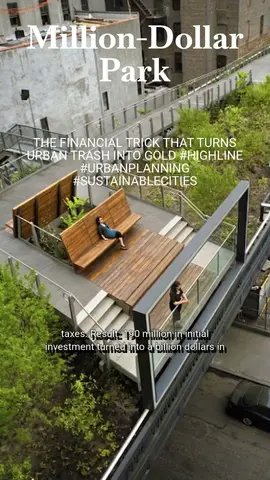
The following decades confirmed the pattern with variants. Tate Modern, opened in 2000 in a London power station, regenerated Bankside and sent its prices soaring. New York's High Line, inaugurated in 2009 on a rail viaduct, multiplied the value of Chelsea and drove out the uses around it. The Zollverein mining complex in Essen, a World Heritage site, and Matadero in Madrid show that public cultural reuse can avoid part of those effects when the land remains in public hands and the project serves the neighbourhood. Worker-recovered factories and occupied social centres are the other route.
The lesson of Zukin and Smith is that industrial land is not reused in the abstract but in someone's favour. The same shed can become luxury apartments, public housing, a cultural centre or productive workshops, and the difference is made by land ownership, the conditions of rezoning and residents' participation. A city that reuses its factories without those guarantees trades deindustrialisation for gentrification; one that imposes them turns its industrial legacy into common heritage.
Frequently asked questions
What is the reuse of industrial land?
It is the conversion of factories, warehouses, docks and railways abandoned by deindustrialisation into housing, offices, cultural facilities and parks, the great planning operation of Northern cities since the 1970s, from Docklands to Abandoibarra.
Why does industrial reuse produce gentrification?
Because, according to Neil Smith, industrial land has almost nil current rent and very high potential rent, so capital flows toward it with public help, and, according to Sharon Zukin, culture and artists turn industrial space into real estate product and are the first to be displaced.