Key points
- Zukin: the creativity of SoHo's first occupants generated the value the market captured by pushing them out.
- Smith: the more run-down and central the space, the larger the rent gap and the reinvestment opportunity.
- Public ownership, regulated temporary uses, affordable housing and participation keep reuse from becoming gentrification.
The reuse of abandoned spaces is the transformation of disused factories, warehouses, stations, slaughterhouses and vacant lots into housing, cultural facilities, offices or public space, and it has become one of the central strategies of contemporary planning for two reasons: it makes use of central, already urbanised land and it preserves an industrial heritage that gives cities their character. Its risks are equally well known. Sharon Zukin identified them in 1982 in Loft Living, the first study of how the conversion of SoHo's lofts in New York produced gentrification, and Neil Smith explained in The New Urban Frontier (1996) the economic logic that makes every abandoned space an opportunity for reinvestment.
Loft Living: how SoHo went from precarious studio to luxury product
Zukin documented the sequence that would later repeat around the world. Artists occupied in the 1960s and 1970s the empty industrial buildings of SoHo because they were cheap and spacious, adapted them as home and studio and created a neighbourhood with cultural life. The city legalised that use, the media turned it into a lifestyle, and developers and high-income buyers came to pay for the industrial aesthetic what the artists could not afford, pushing them out. Zukin called this the artistic mode of production: the creativity of the first occupants generates the value the market later captures. The loft went from precarious solution to luxury product in twenty years.
Neil Smith: the rent gap and the frontier of abandoned spaces
Smith supplied the theory. His rent gap explains that an abandoned building or neighbourhood, with low current rent and high potential rent, attracts investment as soon as the difference outweighs the cost of rehabilitation. Abandoned spaces are, in that logic, the urban frontier that capital reconquers, and reuse is the form that reconquest takes: the more run-down and central the place, the greater the opportunity. Smith warned that the discourse of regeneration presents as progress what is, to a large extent, a transfer of value from those who used the space to those who reinvest in it.
Tate Modern, High Line, Matadero, Tempelhof: four outcomes
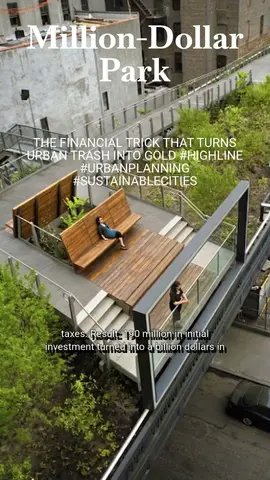
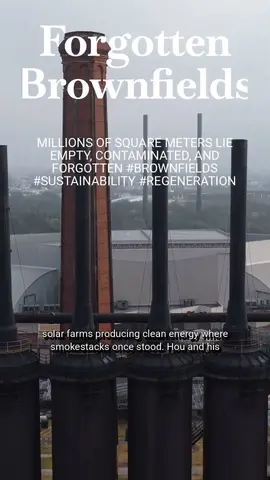
The examples show the range of outcomes. Tate Modern, opened in 2000 in a London power station, created a world museum and accelerated the rise in values across Bankside. New York's High Line, inaugurated in 2009 on an elevated railway, became an iconic park and multiplied prices in Chelsea, displacing shops and residents. Matadero Madrid, since 2006, converted the old slaughterhouse into a public cultural centre that has kept an open use. Tempelhof in Berlin, an airport closed in 2008, is now a park defended by referendum against development. And thousands of smaller sheds house cooperatives, markets and workshops with less shine and deeper roots.
Conditions for reuse that benefits the city
The conditions for reuse to benefit the city follow from those cases. Public ownership or management of the most valuable spaces, so that cultural or community use does not depend on profitability. Regulated temporary uses that allow experimentation without preparing the ground for rising values. Affordable housing quotas when converting to residential use, and protection of the productive and craft uses that provide jobs. Residents' participation in deciding what is done with the space. And honest accounting of who gains from the operation: if the value reuse creates goes to the developer, the city has given away its heritage.
Reusing abandoned spaces is, at bottom, deciding to whom what the city stopped using is returned. Zukin and Smith teach us to recognise the trap: creative and community reuse generates the value that real estate reuse captures. Avoiding it requires administrations to treat empty factories, slaughterhouses and stations as commons rather than building plots, and to measure the success of every conversion by who uses it and who still lives nearby, not by the price at which it is sold.
Frequently asked questions
What did Sharon Zukin show in Loft Living?
That the artists who occupied SoHo's empty industrial buildings in the 1960s and 1970s created a neighbourhood with cultural life whose value developers and high-income buyers later captured, pushing them out; she called that process the artistic mode of production.
How can the reuse of abandoned spaces avoid gentrification?
Through public ownership or management of the most valuable spaces, regulated temporary uses, affordable housing quotas when converting to residential use, protection of productive uses, residents' participation and honest accounting of who gains from the operation.