Key points
- Peck: neoliberalism is not a state but a process, neoliberalization, different in each city according to its history and resistances.
- Urban crises, New York 1975, Katrina 2005, 2008, are used to impose reforms that would otherwise be rejected.
- His 2005 critique of the creative class showed a neoliberal policy in progressive dress, cheap and without evidence.
Constructions of Neoliberal Reason (2010) is the book in which the British geographer Jamie Peck, professor at the University of British Columbia, reconstructs the intellectual history of neoliberalism to explain why, far from being a coherent doctrine applied from above, it is a disorderly, contradictory process in permanent reconstruction that finds in cities its preferred laboratory. Peck follows the idea from Friedrich Hayek's seminars in the 1930s and the Mont Pelerin Society of 1947 to Milton Friedman's Chicago School, the think tanks of the 1970s and the urban austerity policies after the 2008 crisis, and shows that each failure has served to relaunch it.
Variegated neoliberalization: a process, not a state
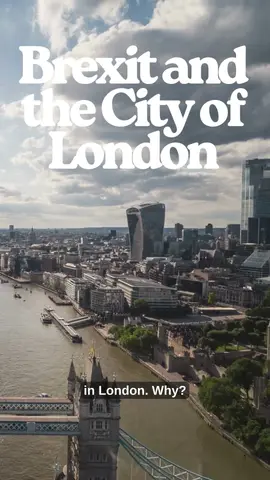
His central thesis is that neoliberalism is not a state but a process: neoliberalization. There is no fully neoliberal city, only cities reformed again and again in the direction of the market, each according to its history, institutions and resistances. With Neil Brenner and Nik Theodore, Peck called this variegated neoliberalization: the same impulse produces different results in Chicago, London, Santiago de Chile or Johannesburg, and that variety is not a deviation from the model but its real way of existing. Studying neoliberalism therefore requires following it case by case.
The city as laboratory: crisis, austerity and reforms
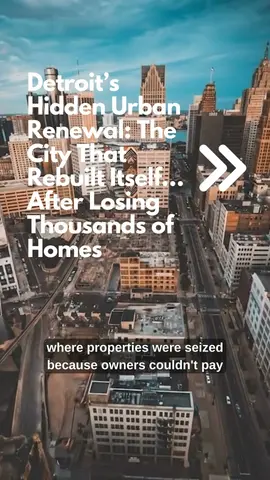
Cities are at the centre of his analysis. Peck describes how urban crises, New York's bankruptcy in 1975, Detroit's decline, the devastation of New Orleans after Hurricane Katrina in 2005, have been used to impose reforms that under normal conditions would have been rejected: service cuts, privatisation of public housing and schools, land deregulation, incentives for investors. The city becomes a laboratory where policies are tested and then circulate as recipes, and the austerity urbanism Peck analysed after 2008 is the most recent version: city governments absorb the cuts and compete with each other for capital.
From the creative class to fast policy
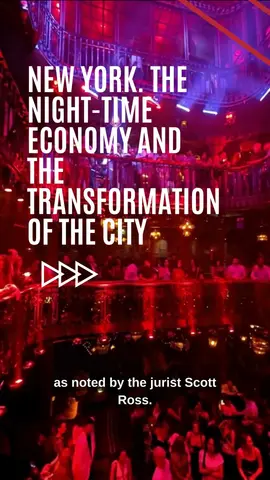
Peck is also the author of the most cited critique of Richard Florida's creative class. In 2005 he showed that the recipe of attracting talent with culture, tolerance and nightlife was a neoliberal policy in progressive dress: cheap, saleable and compatible with continuing to cut housing and services, and without evidence that it produced the promised growth. That analysis anticipated his work with Theodore on fast policy, Fast Policy (2015), which studies how models such as the participatory budget or conditional cash transfers travel from city to city, are simplified along the way and adopted without evaluating whether they work.
Discourse and practice: neoliberalism's active state
Peck's contribution to urban studies is methodological as much as political. He teaches how to distinguish the discourse of neoliberalism, free markets, minimal state, from its practice, which needs an active state to create markets, rescue banks and discipline the poor. He shows that cities are not passive victims but arenas where the process is negotiated and resisted, and that the resistances, housing movements, alternative municipal governments, urban commons, are part of the history of neoliberalism as much as its promoters.
Constructions of Neoliberal Reason remains the reference for understanding a term that is used a great deal and explained little. Its lesson for those who study or govern cities is that neoliberalism is not defeated by an election nor exhausted by a crisis, because it rebuilds itself in each one; that it has to be analysed in its local variety; and that the city, laboratory of its reforms, is also the place where the alternatives can be tried.
Frequently asked questions
What does Jamie Peck argue in Constructions of Neoliberal Reason?
That neoliberalism is not a coherent doctrine applied from above but a disorderly, contradictory process in permanent reconstruction, which needs an active state and finds in cities its laboratory: urban crises are used to impose reforms, and each failure serves to relaunch the project.
What is variegated neoliberalization?
The concept Peck formulated with Brenner and Theodore to describe how the same market-oriented impulse produces different results in Chicago, London, Santiago or Johannesburg, so that the variety is not a deviation from the model but its real way of existing and must be studied case by case.