Key points
- Falú: the city has been designed from a male experience, and women's safety requires lighting, transport and public space planned with them.
- Women's participation in planning is a condition of an equitable city, not a complement.
- Feminist urbanism is a human rights question: access to services, care and a life without violence in the city.
Ana Falú, an Argentine architect and planner, professor at the National University of Córdoba and former regional director of UN-Habitat and UN Women for Latin America, is one of the references of feminist urbanism. She has devoted her career to promoting the inclusion of women in urban policy, starting from one thesis: cities are not neutral spaces but are structured in ways that reflect and reinforce existing power relations, and so they exclude women and other groups. Design and planning can perpetuate those inequalities or fight them.
Urban safety from a gender perspective
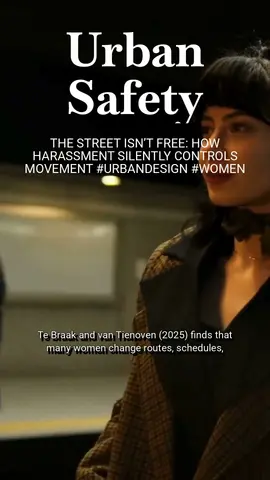
Her best-known contribution is the approach to urban safety from a gender perspective. Women experience public space differently from men and face more risk of violence and harassment, largely because cities were designed without taking their needs and experiences into account. Falú has driven programmes — such as Cities without violence against women, safe cities for all, in several Latin American cities — with concrete measures: better lighting, safe public transport, spaces that encourage community presence and participation. Those interventions do not benefit only women: they improve the quality of life of the whole population.
Women's participation in urban planning
Falú has also stressed the importance of women taking part in urban decisions. Building equitable cities requires them to be represented in planning and design processes; decisions about urban development are frequently taken by male-dominated groups, and the result is policies that do not reflect women's specific needs. Her work has sought to change that dynamic by promoting inclusion at every stage, from policy formulation to project delivery.
Access to resources and services
Beyond safety, Falú insists on designing cities that promote gender equity in access to resources and services. Cities must guarantee that women, whatever their socioeconomic level, can reach housing, transport and jobs; in many of them women from the most vulnerable groups face structural barriers — distance, timetables, cost, unshared care work — that perpetuate their social and economic exclusion. Her research proposes policies that prioritise their inclusion in urban development and a fairer distribution of opportunity.
Feminist urbanism and human rights
Another key contribution is her work at the intersection of feminist urbanism and human rights. The right to the city must be universal and guarantee that everyone, regardless of gender, enjoys a safe, inclusive and accessible urban environment. Urban policy must recognise the multiple discriminations women suffer — by race, class, age — and adopt an integrated approach that attends to the diversity of their experiences and those of other vulnerable groups.
Ana Falú's contribution to feminist urbanism is significant: through her focus on safety, gender equity and community participation she has shown that cities can and should be designed to reflect the needs and experiences of everyone, not only a privileged group. Her work invites a rethinking of urban design from a more inclusive perspective, with one underlying idea: a city that is safe and inclusive for women is a better city for all.
Frequently asked questions
Who is Ana Falú and what does she propose?
An Argentine architect and planner, professor at the National University of Córdoba and former regional director of UN-Habitat and UN Women for Latin America, who proposes designing cities from women's needs and experiences, with safety, services, care and participation in decisions.
What is urban safety from a gender perspective?
An approach that analyses where and when women feel fear in the city and acts on lighting, transport, public space design and community watchfulness, instead of treating violence against women as a private problem.