Key points
- Space does not simply exist: it is produced through human interaction and relations of power.
- Lefebvre breaks it into three dimensions: the perceived, the conceived and the lived.
- Those who inhabit it produce it too, reappropriating through everyday practice what is imposed.
Urban space is a battlefield. That is the idea Henri Lefebvre develops in The Production of Space (1974): space is not a passive container but a dynamic social product that reflects and reproduces political, economic and social relations. It is under permanent construction, and in it the tensions between the forces of capital, the state and people's everyday practices become manifest. The book changed the way we think about how space is conceived and organised in modern cities.
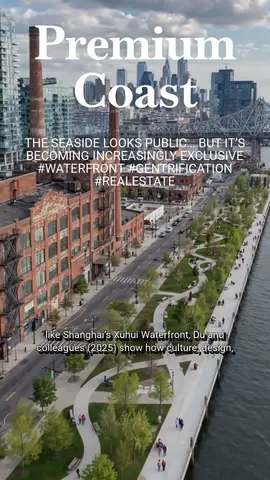
Lefebvre argues that space does not exist on its own: it is a social construction produced by human interaction and by the power structures that dominate society. Urban space reflects the inequalities of capitalism because it is designed according to the interests of the most powerful actors — real estate developers, politicians, economic elites — and used as an instrument of control. Spatial segregation and the marginalisation of the working class and vulnerable groups are not side effects but results of that design.
Perceived, conceived and lived
His conceptual framework breaks the production of space into three interrelated dimensions. Perceived space is the physical and practical dimension: what people see, walk through and use in daily life. Conceived space is the abstract plane on which planners, architects and urbanists design the city, often far from social reality. Lived space is subjective experience: how people feel and interpret space through their interaction with it, its symbols and their memories. The three levels are in tension, and that tension reflects the contradictions of the capitalist system.
Space as a field of struggle
The book's most important contribution is its analysis of space as a field of political struggle. In urban space a constant battle is fought between the forces of capital, which seek to control and exploit it for their own benefit, and people's everyday social practices, which try to appropriate it in more democratic and collective ways. Space is thus the terrain where the tensions between the needs of social life and the demands of the market materialise, which is why it is at once a place of conflict and of resistance.
Everyday reappropriation
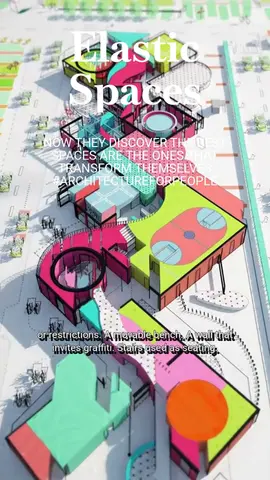
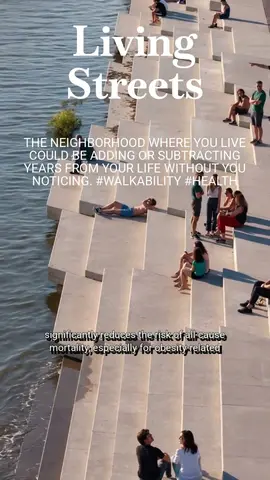
Lefebvre stresses that space is not produced only by the powerful: ordinary people also take part in its production through their everyday practices. Even when a space is designed for specific ends, people reinterpret and transform it according to their needs and desires: the square meant for passing through becomes a meeting place, the vacant lot a football pitch. That reappropriation is for Lefebvre a form of resistance against the hegemonic control of capital and part of the struggle for the right to the city, the claim to equitable access to urban space for everyone.
The Production of Space offers a critical perspective on how urban space is produced and reproduced according to power dynamics and social structures. Understanding space as a social construction and a field of struggle invites us to look at the inequalities inscribed in the city and to think about how to transform it more justly. It is the theoretical basis on which David Harvey, Edward Soja and much of critical urban studies work today.
Frequently asked questions
What are Lefebvre's three dimensions of space?
Perceived space, which corresponds to everyday material practice; conceived space, that of planners and architects, often disconnected from social reality; and lived space, the space of experience and meaning for those who inhabit it.
Why is urban space a field of struggle?
Because the forces of capital, which seek to control and exploit it, constantly collide there with the everyday social practices of those who inhabit and reappropriate it.