Key points
- Downs's triple convergence: every widened road fills up again with drivers from other routes, times and modes.
- Congestion pricing cuts traffic by 15 to 30 percent in London, Stockholm or Singapore.
- Jones proposes measuring streets in people per hour: a bus lane moves several times more than a car lane.
Urban congestion is the situation in which demand for road travel exceeds the capacity of the network, so that every additional vehicle slows down all the others. It costs time, health and money: traffic jams mean losses of dozens of hours a year per driver in large metropolises and a substantial share of emissions and air pollution. Two researchers have set the framework for understanding and fighting it: the American economist Anthony Downs, author of Stuck in Traffic (1992) and Still Stuck in Traffic (2004), and the British transport scholar Peter Jones, professor at University College London.
Anthony Downs: why more lanes do not reduce congestion
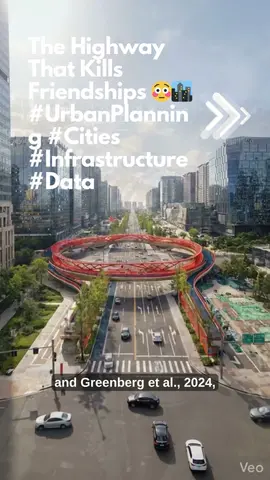
Downs explained why building more roads does not solve congestion. His principle of triple convergence says that when a road is widened and traffic flows better, drivers who used other routes, other times or other modes converge on it until it fills up again. This is the induced demand that Duranton and Turner quantified in 2011: 10 percent more lanes produce 10 percent more kilometres driven. The Downs-Thomson paradox adds that when a road improvement draws users away from public transport, transit loses revenue, cuts frequencies and pushes more people into cars, in a cycle that worsens the whole system.
Congestion pricing: from Singapore to New York
Hence Downs's proposal: congestion pricing, a charge for driving in saturated zones and hours that reflects the cost each driver imposes on everyone else. Singapore has applied it since 1975, London since 2003, Stockholm since 2006, Milan since 2012 and New York since 2025. The results are consistent: 15 to 30 percent less traffic in the zone, faster public transport, cleaner air and revenue reinvested in buses and metro. Initial opposition usually turns into majority support once citizens see the effects, as happened in Stockholm after its referendum.
Peter Jones: measure people, not vehicles
Jones brings the street design perspective. His Link and Place method, developed in 2007, starts from the fact that every street has two functions, moving people and being a place to be, and that twentieth-century planning attended only to the first. Reallocating road space to bus lanes, cycle lanes and pavements does not remove capacity but increases it in people per hour: a bus rapid transit lane moves several times more people than a car lane. Jones argues for measuring congestion in people rather than vehicles, and for planning the whole network, with high-frequency public transport and streets designed for the most efficient mode on each stretch.
Combined strategies against urban congestion
Effective strategies combine several levers. Price: congestion charges, regulated parking and integrated public transport fares. Supply: frequent, prioritised public transport, continuous cycle networks, wide pavements. Management: coordinated traffic lights that give buses priority, real-time information, reversible lanes and regulated loading. Demand: flexible hours and remote work, which spread trips over time. And urban form: compact, mixed neighbourhoods that shorten journeys, the only measure that acts on the cause rather than the symptom.
Downs and Jones agree that congestion is not eliminated but managed, and that the mistake is to treat it as a problem of road capacity. A city that wants fewer jams has to offer alternatives better than the car and charge for the scarce space the car occupies. The cities that have done so, from London to Bogotá, have not achieved empty streets, but they have achieved streets where more people arrive sooner, with less noise and less exhaust.
Frequently asked questions
Why does building more roads not reduce congestion?
Because of induced demand: when a road flows better it attracts drivers from other routes, times and modes until it saturates again; Duranton and Turner measured that 10 percent more lanes generate 10 percent more kilometres driven.
Does congestion pricing work?
Yes: Singapore since 1975, London since 2003, Stockholm since 2006 and New York since 2025 record 15 to 30 percent less traffic in the zone, cleaner air and faster public transport funded with the revenue.