Key points
- Cholera produced sewers and tuberculosis balconies; COVID-19 accelerated changes already under way.
- Paris, Bogotá and Milan turned temporary lanes permanent and adopted the 15-minute city.
- Mortality concentrated in overcrowded neighbourhoods with essential jobs, not in dense ones: the problem is housing and income.
Post-pandemic cities are those that have incorporated into their form, mobility and policies the lessons of COVID-19, the health crisis that between 2020 and 2022 emptied city centres, shut down public transport and turned the street into the only safe space. Pandemics have always shaped cities: nineteenth-century cholera produced sewers, parks and ventilated housing, and tuberculosis inspired the balconies and terraces of the modern movement. COVID-19 did not change the city as much as announced, but it accelerated three transformations already under way: the recovery of public space for pedestrians and cyclists, remote work and its effect on city centres, and the awareness that urban health is unequally distributed.
The street reclaimed: tactical urbanism and the 15-minute city
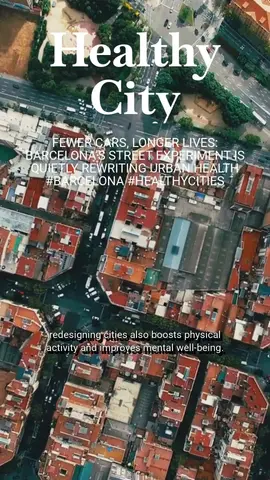
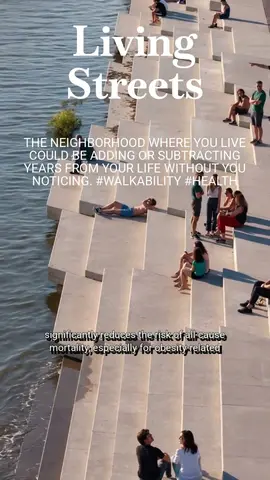
The first transformation was the street. During lockdowns, cities worldwide widened pavements, closed streets to traffic and painted temporary bike lanes to allow distancing: Paris created hundreds of kilometres of lanes it later made permanent, Bogotá added more than eighty kilometres in weeks, Milan approved the Strade Aperte plan and New York opened streets to play and outdoor dining. Tactical urbanism, quick and reversible intervention, became municipal policy, and Carlos Moreno's 15-minute city, adopted by Paris in 2020, named the goal of living with the essentials nearby.
Remote work, empty centres and public transport
The second was remote work. With offices closed, business districts lost their users and with them the shops and restaurants that served them; public transport fell to a fraction of its demand and has not fully recovered commuter trips, while cycling and walking grew. Since then, cities such as New York, London and San Francisco have debated converting empty offices into housing and the future of centres that depended on daily commuting. Remote work also redistributed population toward peripheries and mid-sized cities, with effects on housing prices.
Inequality revealed: overcrowding, not density
The third lesson was inequality. COVID-19 mortality concentrated in poor neighbourhoods dense in occupancy, not dense in buildings: in New York, the Bronx multiplied Manhattan's rates, and in Madrid or Barcelona the southern districts exceeded the northern ones. The causes were overcrowding, essential jobs that allowed no remote work, packed public transport and the lack of nearby green space. The pandemic disproved the idea that urban density was the problem, as Hong Kong and Seoul showed, and revealed that what matters is housing, income and access to services.
The compact city with nuances: space, green and capacity
The debate on the compact city emerged strengthened, with nuances. Dense, well-managed cities withstood the crisis better than sprawling ones, because proximity allows health services, delivery and care, but the pandemic demanded a better distribution of space: more pavement, park and facilities per resident, housing without overcrowding and transport with capacity. Urban green space gained recognition as infrastructure for physical and mental health, and many cities set targets of a park within ten or fifteen minutes of every home.
The lesson of post-pandemic cities is that health crises do not invent the future city but reveal which one was needed. Streets for people, local services, decent housing, reliable transport and accessible green space were the demands before 2020, and COVID-19 turned them into a matter of survival. Cities that have kept the changes, and not only the temporary lanes, are better prepared for the next crisis, whether sanitary or climatic, because urban resilience begins with equality.
Frequently asked questions
How did COVID-19 change cities?
It accelerated three transformations already under way: the recovery of public space for pedestrians and cyclists through tactical urbanism, remote work that emptied business districts and cut public transport use, and the awareness that urban health is unequally distributed among neighbourhoods.
Did urban density favour the pandemic?
Not building density but overcrowding: mortality concentrated in poor neighbourhoods with overoccupied homes, essential jobs without remote work and packed transport, while dense, well-managed cities such as Hong Kong or Seoul withstood the crisis better than sprawling ones.