Key points
- Delaney: territory is a communication that says who is in charge, what may be done and what happens if you disobey.
- Low shows that the most effective boundaries are invisible: prices, guards, missing benches, signs of welcome.
- The inclusive city does not eliminate territories: it guarantees common spaces where no group dominates.
Urban territoriality is the process by which people, groups and institutions claim, mark, control and defend portions of the city's space, with boundaries that may be physical, a wall, a fence, a barrier, or symbolic, a graffito, a way of dressing, a look. The geographer Robert Sack defined it in 1986 as a strategy for influencing people and resources by controlling an area, and since then two authors have brought it to the contemporary city: the anthropologist Setha Low, who studied gated communities and public space, and the geographer David Delaney, who in Territory: A Short Introduction (2005) showed that every territory is at once space, power and meaning.
David Delaney: territory as space, power and meaning
Delaney insists that territory is not a natural given but a communication. A territorial boundary tells whoever crosses it what they may do, who is in charge and what happens if they disobey, and it works because those who see it understand and accept it. That is why urban territories are so diverse: private property, the municipality, the school district, the neighbourhood, a gang's corner, a bar's terrace, the square taken by a demonstration. Each has its way of marking, its access regime and its way of sanctioning, and all layer control over the same ground.
Setha Low: from gated communities to guarded plazas
Low supplies the ethnography. In Behind the Gates (2003) she studied gated communities in New York and Texas and showed territoriality in its most literal form: walls, guardhouses and guards separating those who belong from those who do not, which residents justify with fear and a desire for homogeneity even though they do not feel safer. In her work on plazas and parks, from Costa Rica to New York, she documented subtler territories: the remodelling that expels vendors and pensioners, the design that decides who may sit, the private security that turns public space into de facto property.
Inclusion and exclusion: the boundaries that cannot be seen
Territoriality produces inclusion and exclusion at once. A neighbourhood with a strong identity protects its residents and sustains their networks, but it may close itself to newcomers; a gang's territory offers belonging to its members and danger to everyone else; a business improvement district keeps downtown streets clean and pushes out homeless people. Low stresses that the most effective boundaries are the ones that cannot be seen: the price of a coffee, a guard's uniform, the absence of benches, signage that suggests who is welcome. Hostile architecture, spikes and divided benches, is territoriality turned into furniture.
Reading the city through territoriality: gentrification, protest and invisible borders
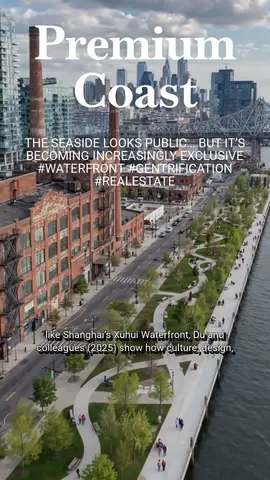
Territorial analysis helps read current urban conflicts. Gentrification is a change of territory: new residents mark the neighbourhood with their shops and their norms and the old ones stop recognising it as theirs. Protests that occupy squares dispute whom public space belongs to. Teresa Caldeira's fortified enclaves or the militarisation Stephen Graham describes are forms of class and state territoriality. And the invisible borders between neighbourhoods, which people learn as children and respect all their lives, explain why geographic proximity does not produce social mixing.
For planning, the lesson of Low and Delaney is twofold. First, every design produces territory: every fence, every bench, every camera and every rule of use decides who enters and who is left out, and it is better to do so consciously. Second, the inclusive city is not one that eliminates territories, impossible while groups have identities, but one that guarantees spaces where none dominates: streets, squares, parks and transport where strangers and unequals can coexist under shared rules. That common space is what private territoriality, with walls or with prices, threatens every day.
Frequently asked questions
What is urban territoriality?
It is the process by which people, groups and institutions claim, mark, control and defend parts of urban space with physical or symbolic boundaries; according to Robert Sack, a strategy for influencing people and resources by controlling an area.
What is hostile architecture?
It is street furniture designed to prevent unwanted uses, such as spikes under bridges, divided benches that prevent lying down or sloped surfaces; Setha Low reads it as territoriality turned into design that expels homeless people above all.