Key points
- The most used plazas offer comfortable seating, sun, shade, water and food, not more size.
- Whyte's triangulation: an external stimulus gets strangers talking and counters loneliness.
- Gehl links daily walking, familiar faces and reasons to go out with less depression and isolation.
Urban well-being and mental health are linked through the design of the city: the shape of streets, the quality of plazas and access to nature influence the stress, anxiety and loneliness of the people who live there. City living is associated with a higher risk of anxiety and mood disorders, but that risk is not uniform. It depends on noise, on density without open space and on the absence of social contact. Two observers of public space, William H. Whyte and Jan Gehl, demonstrated with data which elements of the urban environment help people feel better.
William H. Whyte and the social life of plazas
Whyte founded the Street Life Project in New York in 1970 and spent years filming how Manhattan's plazas were used. In The Social Life of Small Urban Spaces (1980) he summed up what he had learned: people sit where there is somewhere to sit, seek sun or shade depending on the season, gravitate toward the edges of busy streets and linger where there is water, trees and food. He found that the most used plazas were neither the largest nor the most expensive, but those offering comfortable, movable seating oriented toward the passing crowd.
From his work came the concept of triangulation: an external stimulus, such as a street musician or an odd sculpture, that leads two strangers to talk to each other. That light, non-committal contact is, according to environmental psychology, one of the best antidotes to urban loneliness. Whyte persuaded New York City to require seating in privately owned public plazas, and his method of systematic observation remains the foundation of organisations such as Project for Public Spaces.
Jan Gehl and the city at human scale
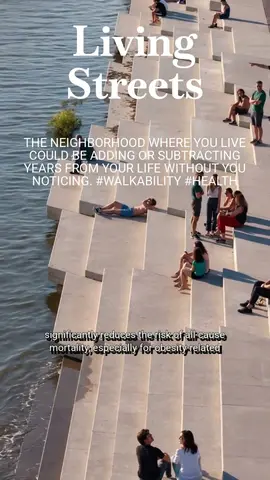
Gehl reached similar conclusions in Copenhagen. In Life Between Buildings (1971) and Cities for People (2010) he shows that optional activity, the kind done for pleasure rather than necessity, only appears when the environment is pleasant, safe and built for walking speed. A street with active frontages, benches, shade and little traffic invites people to stay; an avenue of blank walls and fast cars pushes them away. Gehl links that difference directly to health: walking every day, seeing familiar faces and having reasons to leave the house protect against depression and isolation.
Density, nature and mental health in cities
Both authors warn about badly handled density. Compact cities can be the healthiest if they offer parks within a ten-minute walk, quiet streets and places to be without spending money. Later evidence confirms it: regular exposure to green space is associated with fewer depressive symptoms, and constant traffic noise with more anxiety and poorer sleep. Whyte and Gehl did not talk about neuroscience, but their prescriptions, sitting, walking, meeting, match what urban public health studies recommend today.
Bringing these ideas into planning means measuring well-being and not just traffic: counting how many people stop in a plaza, how many children play in the street, how many older residents go out each day. It also means favouring small interventions, benches, trees, fountains, open frontages, over grand projects, because they are what change everyday experience. A city that looks after its residents' mental health is one whose public space invites people to stay, and that invitation is designed.
Frequently asked questions
What is triangulation according to William H. Whyte?
It is the process by which an external stimulus, such as a street musician or a sculpture, prompts two strangers to talk to each other; Whyte identified it as one of the mechanisms that give a plaza its social life.
How does urban design affect mental health?
Traffic noise, density without open space and lack of social contact raise stress and anxiety; nearby parks, quiet streets and places to sit and meet reduce them.