Key points
- Pedestrianization redesigns the street as a place to stay, not just a car-free corridor.
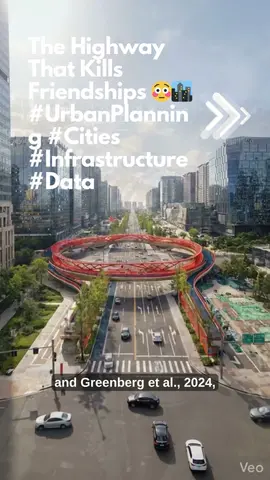
- Appleyard measured that heavy traffic cuts friendships between neighbours to a third.
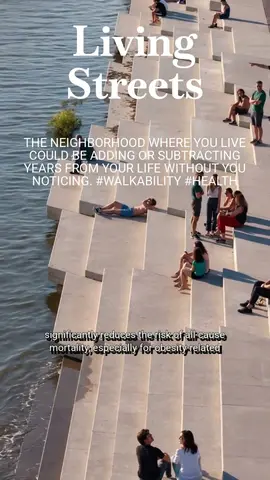
- Health, local retail and climate all improve when streets are designed for walking speed.
Pedestrianization is the urban policy of restricting or removing motor traffic from a street or district so that the space is returned to people on foot. It is not just a matter of installing bollards: it means redesigning the paving, furniture, trees and access points so that the street works as a place to stay rather than a corridor to pass through. Two authors explain better than anyone why it works: the Danish architect Jan Gehl, who has spent half a century measuring how public space is used, and the planner Donald Appleyard, whose study of three San Francisco streets proved the social cost of traffic.
Jan Gehl and life between buildings
Gehl published Life Between Buildings in 1971 and Cities for People in 2010, two books built on a simple observation: people go where other people are. His method counts activities in the street and separates the necessary ones, such as walking to work, from the optional ones, such as sitting in the sun or stopping to chat. Optional activities only appear when the environment is comfortable and safe, and they are what makes a city feel alive. In Copenhagen, where Gehl advised the gradual pedestrianization of Strøget from 1962 onward, the number of people lingering in the centre multiplied as the cars were removed.
For Gehl, pedestrianization has to be designed at human scale: active frontages every few metres, benches facing the flow of passers-by, shelter from wind and noise, and distances that can be covered at five kilometres an hour. When a street is designed for the speed of the car, the details vanish and the pedestrian gets bored or feels unsafe. When it is designed for walking speed, local shops, chance encounters and a sense of belonging to a neighbourhood appear.
Donald Appleyard and the social cost of traffic
Appleyard, a professor at Berkeley, compared three residential streets in San Francisco in the early 1970s: one with light traffic, one with moderate traffic and one with heavy traffic. The results, published in Livable Streets in 1981, were stark. Residents of the light-traffic street had three times as many friends and twice as many acquaintances on their own street as residents of the heavy-traffic street. The latter felt that their home ended at the front door, while the former regarded the pavement and even the roadway as part of their domestic territory.
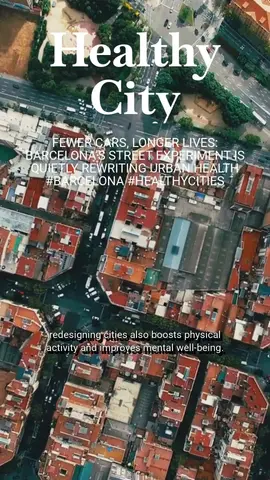
Appleyard turned an intuition into data: through traffic destroys social ties, not just clean air. Every car that speeds down a street lowers the odds that two neighbours greet each other, that children play outside or that someone keeps an eye on what happens. Pedestrianization, or at least traffic calming, restores those relationships. Decades later, Barcelona's superblocks and London's low-traffic neighbourhoods apply the same logic: fewer cars passing through, more street for the people who live on it.
Benefits of pedestrianization for health, retail and climate
The effects of pedestrianization add up across several fronts. In public health, daily walking lowers the risk of obesity, cardiovascular disease and depression, and removing vehicles cuts pollution and noise. In the local economy, shops on pedestrian streets usually record more footfall and higher sales than those on streets with traffic, contrary to the fear most retailers voice beforehand. In climate terms, every trip on foot replaces emissions and frees land once occupied by lanes and parking for trees, shade and sustainable drainage.
Good pedestrianization also takes care of those who depend on vehicles: timed windows for deliveries, access for residents and people with reduced mobility, and public transport that reaches the edge of the pedestrian zone. Gehl and Appleyard agree that the aim is not to ban the car but to correct a priority that was inverted for decades. Streets are the most abundant public space in any city, and deciding who gets them is one of the most political choices in contemporary urbanism.
Frequently asked questions
What did Donald Appleyard show in Livable Streets?
He compared three San Francisco streets with different traffic levels and found that residents of the quiet street had three times as many friends and twice as many acquaintances on their street as those on the heavy-traffic street.
Does pedestrianization hurt local shops?
The evidence says the opposite: pedestrian streets usually record more footfall and higher sales than streets with traffic, provided deliveries and public transport access are properly organised.