Key points
- Sennett: the public is the competence of living with strangers, and dead space erodes it.
- Low: people abandon places where they do not feel represented; every remodelling takes sides.
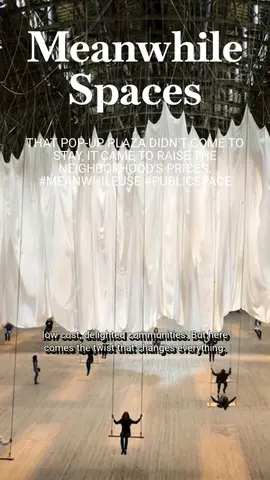
- Private plazas and improvement districts give cleanliness and safety in exchange for excluding non-consumers.
Inclusive public space is the set of streets, squares, parks and open facilities where anyone can be, move and take part without their income, age, gender or origin deciding whether they are welcome. It is the infrastructure of urban democracy, because it is the only place where strangers and unequals coexist under shared rules, and also the most threatened by privatisation, surveillance and exclusionary design. Two authors have set the terms of the debate: the sociologist Richard Sennett, who in The Fall of Public Man (1977) explained why public life declines, and the anthropologist Setha Low, who has spent four decades measuring what makes a plaza just or exclusionary.
Richard Sennett: the public as a competence for living with strangers
Sennett holds that the public is not only a space but a competence: the ability to live with strangers through conventions that do not require intimacy. That competence, which flourished in the coffeehouses and promenades of the eighteenth century, was eroded by a culture of intimacy that values only the personal and treats the stranger as a threat. The dead public space Sennett describes, transit plazas, glass towers, single-use districts, is at once cause and effect of that loss. His later work, up to Building and Dwelling (2018), proposes an open, porous city that forces mixing instead of avoiding it.
Setha Low: six principles for inclusive public space
Low supplies the method for evaluating each concrete space. Her ethnography of plazas in San José, Costa Rica, parks in New York and gated communities in Texas shows that every remodelling takes sides: the one that expels vendors and pensioners to attract tourists, the one that replaces benches with bollards, the one that hands management to a private foundation. In Rethinking Urban Parks (2005) she set out six principles for inclusive space, among them that people abandon places where they do not feel represented, that access and management must allow diversity and that maintenance and symbols communicate who is welcome.
Private management or commons: two policy models
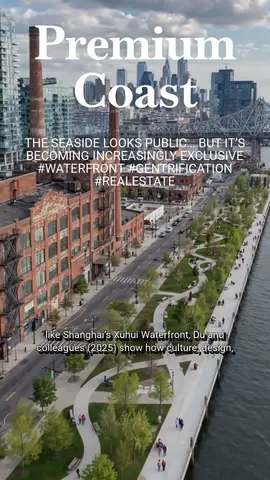
Public space policy swings between two models. Private management, which since New York's 1961 zoning lets developers build higher in exchange for privately owned public plazas, and which business improvement districts extend to whole streets with their own security and rules: clean and safe spaces, but closed to those who do not consume. And public, participatory management, which treats space as a commons, designs it with residents and admits uses the market does not tolerate: the street vendor, children's play, the demonstration, the homeless person.
Participation: the difference between living and policed plazas
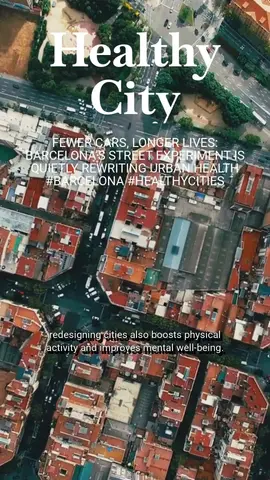
Participation is the decisive difference. Low shows that spaces designed with their users, through observation, workshops and shared management, are used more and deteriorate less, while those designed from the office for an abstract user end up empty or policed. Cities such as Copenhagen, with Jan Gehl's public life surveys, Barcelona, with its superblocks debated neighbourhood by neighbourhood, or Bogotá, with the recovery of pavements and parks in poor areas, have made that participation the core of their public space policy.
The joint lesson of Sennett and Low is that inclusive public space is not produced by good design alone but by a decision about who should be able to be in it. Every bench removed, every camera installed, every rule of use and every concession to a company shifts that boundary. A city that wants to be inclusive and participatory has to ask, before every square, who is missing from it and why, and correct design and management until nobody is left out.
Frequently asked questions
What makes a public space inclusive?
That anyone can be, move and take part without income, age, gender or origin deciding whether they are welcome; according to Setha Low, it requires access and management that allow diversity, welcoming symbols and maintenance, and user participation in design.
What are privately owned public spaces?
They are spaces that since New York's 1961 zoning developers cede to public use in exchange for building higher; they offer cleanliness and safety but with private rules and surveillance that usually exclude non-commercial uses.