Key points
- Augé calls non-places the spaces without history, identity or relations: airports, motorways, shopping malls.
- A place is loaded with cultural and relational meaning; a non-place is anonymous and interchangeable.
- They are products of global processes that prioritise efficiency and mobility over the local.
A non-place is a space of transit that lacks the historical, relational and symbolic identity that defines places: the airport, the shopping mall, the motorway, the hotel chain. The concept was introduced by the French anthropologist Marc Augé (1935–2023) in Non-Places: Introduction to an Anthropology of Supermodernity (1992; English edition 1995) to describe the spaces that proliferate with globalisation and with what he calls supermodernity, the acceleration and excess — of events, of space, of individual references — that characterise contemporary life. They are sites people pass through without staying, where no connections or sense of belonging are formed.
Places and non-places
Augé sets the non-place against the anthropological place, which is loaded with cultural, historical and relational meaning: it has a history, it is lived in and remembered by those who inhabit it, and in it people recognise one another. The non-place is essentially anonymous, stripped of those layers. In it individuals become passing subjects, with no role beyond fulfilling a specific function — waiting for a flight, making a purchase — and they relate to the space through texts and instructions: signs, screens, cards, contracts.
Efficiency, mobility and uniformity
Non-places are the product of global processes that prioritise efficiency, mobility and uniformity over local particularities. An airport is designed to maximise the flow of people and does not aim to have an identity beyond its functionality; that is why it looks like every other airport. That kind of space reflects the growth of global mobility, in which people move quickly from one site to another without stopping to connect with what they pass through. That transience is, for Augé, a fundamental feature of supermodernity.
Anonymity and depersonalisation
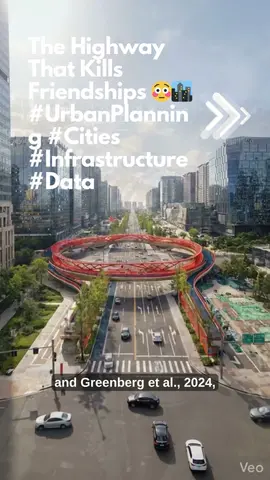
One of his key points is that non-places produce an experience of anonymity and depersonalisation. Whoever is in them is surrounded by others but rarely forms meaningful relationships: in a shopping mall or on a motorway people cross paths without genuinely interacting, and that reinforces a sense of isolation despite being in a collective environment. That disconnection reflects a change in how people relate to space and to one another.
Neither good nor bad: inevitable
Augé does not condemn non-places as something negative in themselves. He presents them as an inevitable feature of contemporary life that answers the needs of a globalised, technological world: their standardisation and functionality allow more mobility and accessibility, and ease exchange and communication on a global scale. What he raises is the question of the price: what happens to the human experience of inhabiting the world when more and more time is spent in spaces without identity or roots. And he warns that place and non-place are poles, not pure categories: an airport can be a place for those who work in it.
Non-Places remains a useful conceptual tool for understanding the spaces that characterise modern life, those born of globalisation and accelerated mobility, and for asking how they shape our relationship with our surroundings and with others. Thirty years on, the concept has travelled from airports to digital platforms, which may be the most frequented non-places of all.
Frequently asked questions
What is a non-place according to Marc Augé?
A contemporary space lacking the history, identity and relations that define an anthropological place: the airport, the motorway, the hotel chain, the shopping mall. It is passed through rather than inhabited and looks the same anywhere in the world. Augé set out the idea in Non-Places, first published in French in 1992.
Are non-places a bad thing?
Not necessarily. Augé describes them as an inevitable feature of supermodernity that answers the need for mobility and efficiency. Their standardisation eases global exchange; the price is the anonymity and disconnection experienced by those who use them.