Jane Jacobs
1916–2006
Journalist and activist who in 1961 showed that planners were destroying the very thing that makes a neighbourhood work.
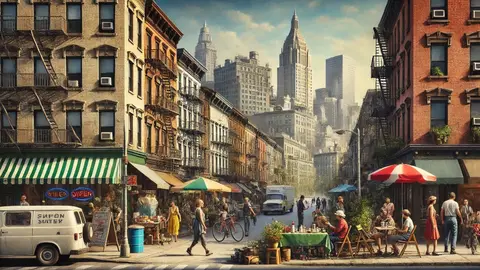
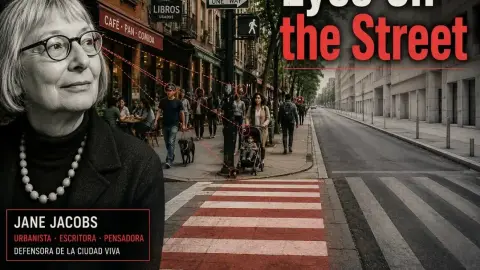
Jacobs watched her own street in Greenwich Village and described what the urbanism of the day could not see: that safety comes not from the police but from «eyes on the street», people going in and out of shops and doorways at different hours. That requires mixed uses, short blocks and buildings of different ages.
Her book stopped urban motorways and changed the discipline, though her legacy is now invoked in both directions: by those defending neighbourhood life and by those opposing new housing. She is worth reading with that in mind.
Born in Scranton, Pennsylvania, in 1916, without a university degree, Jacobs was working as a journalist at Architectural Forum when she wrote The Death and Life of Great American Cities (1961), the most widely read attack on postwar urban renewal. Against housing projects and expressways, she defended streets with lively pavements, mixed uses, short blocks, old buildings and density, and the eyes on the street that watch it without police. At the same time, she led the neighbourhood resistance that stopped Robert Moses's expressway through Lower Manhattan.
In 1968 she moved to Toronto, where she helped stop the Spadina Expressway, and went on writing about economics: The Economy of Cities (1969) and Cities and the Wealth of Nations (1984) argue that innovation is born in diverse cities and not in nations. Critics point out that her ideal neighbourhoods, such as Greenwich Village, ended up gentrified, and that her work says little about race and power; she died in 2006 as the reference for every urbanism that starts from the street.
Videos on Jane Jacobs (2)
- Urban economy
Jane Jacobs: How Life on the Streets Builds Safe and Vibrant Cities
Jane Jacobs argued that mixed uses, small blocks, old buildings and density keep streets alive and safe through…
Jane Jacobs 3 min read - Public space
Jane Jacobs: the street as the engine of the city
Jane Jacobs showed in 1961 that mixed uses, density and active streets keep a neighbourhood safe better than any…
Jane Jacobs 2 min read

Where Jane Jacobs is cited (17)
- Public space
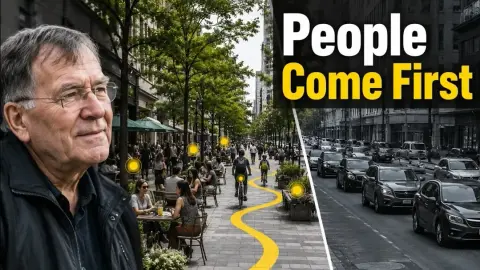
Why Walking Makes Cities Livelier and Safer: Jan Gehl's Evidence
Walking is the basis of public life and safety. What Jan Gehl measured in Cities for People, his twelve quality…
Jan Gehl 3 min read - Public space
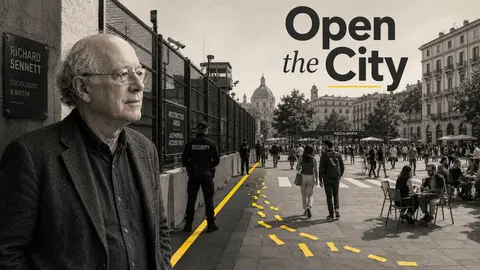
Richard Sennett's Open City: Open or Close the Public Space?
Richard Sennett defends the open city, designed for encounters with strangers, against closed enclosures. Ville and…
Richard Sennett 3 min read - Urban economy
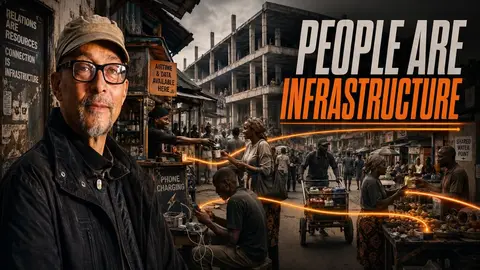
AbdouMaliq Simone: People as the Infrastructure of the City
AbdouMaliq Simone shows that informal networks sustain urban life in the Global South: people as infrastructure,…
AbdouMaliq Simone 3 min read - Urban economy
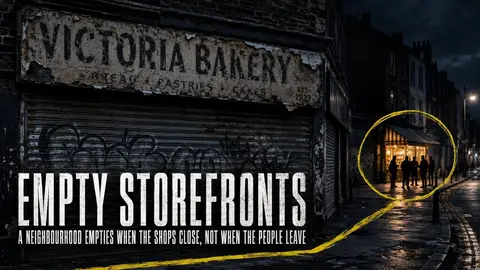
Closed Shutters Close Businesses and Communities: The Ground Floor
Why a street full of homes can feel empty: Jacobs's eyes on the street, Klinenberg's Chicago heatwave, thousands of…
3 min read - Public space
Security Through Walls: Protection or Segregation?
Gated communities privatise surveillance and empty the street. What Caldeira, Low and Sabatini show about fortified…
3 min read - Infrastructure
The 15-Minute City Conspiracy: How Proximity Became a Lockdown
How Carlos Moreno's 15-minute city, a century-old proximity idea, became a conspiracy theory after Oxford's 2023…
3 min read - Urban history
Peter Hall's Cities of Tomorrow: A History of Urban Planning
Cities of Tomorrow (1988) by Peter Hall traces the twentieth century's planning ideas, from Howard to Le Corbusier,…
Peter Hall 2 min read - Public space
Great Streets by Allan Jacobs: What Makes a Street Great
Great Streets (1993) by Allan Jacobs compares the world's best streets at the same scale and draws eight…
Allan Jacobs 3 min read - Urban geopolitics
James Scott: Why the State's Grand Plans Fail
James C. Scott explains in Seeing Like a State why high modernist plans fail: legibility, Le Corbusier, Brasília…
James Scott 2 min read - Urban history
Robert Caro and Robert Moses: The Legacy of The Power Broker
The Power Broker, by Robert Caro, tells how Robert Moses transformed New York without ever being elected: parks,…
Robert Caro 3 min read - Housing
Naked City by Sharon Zukin: Gentrification and Urban Authenticity
Naked City (2010) by Sharon Zukin shows how the search for authenticity gentrifies New York's neighbourhoods.
Sharon Zukin 2 min read - Public space
Richard Sennett and the Decline of Public Life
In The Fall of Public Man (1977) Richard Sennett explains how the tyranny of intimacy emptied public space. Key…
Richard Sennett 3 min read - Housing
Anna Minton: Ground Control and the Privatisation of Public Space
Anna Minton exposed in Ground Control and Big Capital the privatisation of public space, security by design and…
Anna Minton 3 min read - Public space
Feminist City by Leslie Kern: The City Made by and for Men
Feminist City (2019) by Leslie Kern shows how the city was designed for a default man and how mothers, women alone…
Leslie Kern 2 min read - Urban form
Reurbanization and Urban Renewal: Opportunities, Risks and Cases
Reurbanization reuses central land but can expel residents. What Sharon Zukin, Neil Smith and Michael Storper…
3 min read - Urban form
New Urbanism: Duany, Plater-Zyberk and Suburban Nation
What New Urbanism is and what Andrés Duany and Elizabeth Plater-Zyberk propose in Suburban Nation: mixed-use,…
2 min read - Urban form
The 15-Minute City: What It Is, How It Works and Its Critics
Carlos Moreno's 15-minute city brings housing, work, services and leisure within a quarter of an hour on foot.
3 min read