Key points
- Sustainable mobility answers congestion, pollution and climate change by cutting car dependence.
- Newman shows that planning has favoured the car and, with it, unsustainable urban expansion.
- Banister calls for transforming transport policy and promoting active modes, not just building infrastructure.
Sustainable mobility is the approach to urban transport that seeks to reduce dependence on the private car and its effects — congestion, pollution, emissions — by promoting public transport, cycling and walking, and by shaping the city so that trips are shorter. It has become a priority for planners and local governments, and three authors have studied how to achieve it: Peter Newman, David Banister and Jeff Kenworthy. Their work shows that it improves quality of life, mitigates climate change and reduces inequality, as long as it is done with everyone and not only for some.
Peter Newman: the car-dependent city
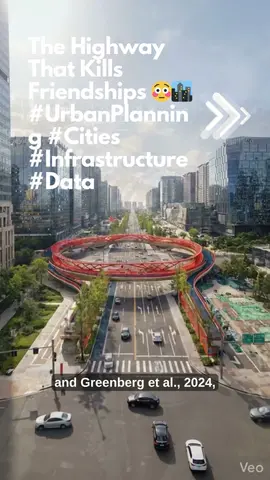
Peter Newman, co-author with Kenworthy of Sustainability and Cities: Overcoming Automobile Dependence (1999), is one of the pioneers in defending sustainable mobility as an essential component of urban development. Newman shows that the planning of many cities historically favoured the car, which led to unsustainable urban expansion and growing dependence on oil. He proposes a more compact model in which trains and buses play a central role: cities that cut car use do not only pollute less, they gain quality of life by reducing congestion and fostering more cohesive communities.
David Banister: changing transport policy
David Banister, author of Transport Planning and of the idea of the sustainable mobility paradigm, complements that analysis by insisting that transport policy must be transformed to encourage non-polluting modes, cycling and walking. Sustainable mobility, he argues, goes beyond building public transport infrastructure: it requires a cultural shift that leads people to move actively. Policies must make cycling and walking attractive and safe options — segregated cycle lanes, better pavements, accessible environments — with environmental benefits and public health benefits too.
Kenworthy: density and car use
Jeff Kenworthy has studied the relationship between urban density and car use. With Newman he developed the concept of the automobile-dependent city and showed, comparing dozens of cities around the world, that low-density cities depend far more on the car than dense ones with good public transport. To reduce that dependence, cities must encourage compact areas where services, jobs and housing are close together and reachable by sustainable means. That reduces car use and produces, in addition, a more vibrant urban life.
Equity and emissions
All three agree that sustainable mobility does not only require physical infrastructure but comprehensive policies that promote equity. Improving public transport and building infrastructure for cyclists and pedestrians must be accompanied by measures that make those modes accessible to every social group: affordable fares and planning that brings sustainable infrastructure to marginalised neighbourhoods too, since it tends to concentrate in central and wealthy areas.
One of the main advantages is the reduction of greenhouse gas emissions. According to Newman and Kenworthy, transport is one of the sectors that contributes most to global CO₂ emissions, and cutting car use significantly is crucial for cities to meet their climate goals. It also brings side benefits: better air quality and fewer health problems linked to pollution. The combination of efficient public transport, cycling and walking, and compact cities is the key to moving towards a more sustainable and equitable urban model.
Frequently asked questions
What is sustainable mobility?
An approach to transport planning that seeks to reduce dependence on the private car and its effects — congestion, pollution, emissions — by promoting public transport, cycling and walking, and by shaping the city so that trips are shorter.
What did Newman and Kenworthy demonstrate?
That there is a close relationship between urban density and car use: sprawling low-density cities depend far more on the car than compact ones. This is the basis of their concept of automobile-dependent cities, which underpins much later planning.