Key points
- Urban Age compared six cities with the same indicators at the same scale: density, transport, income and emissions.
- Compact, well-connected cities are at once more equitable and more sustainable, the editors argue.
- Critics object to a view from the aeroplane that sees forms and flows but not the life of neighbourhoods.
The Endless City (2007) is the book in which Ricky Burdett and Deyan Sudjic summarised the Urban Age project, the initiative of the London School of Economics and Deutsche Bank's Alfred Herrhausen Society that between 2005 and 2006 gathered mayors, planners and architects in six cities to compare how they faced twenty-first-century urbanization. Published by Phaidon with hundreds of maps, charts and photographs, the volume studies New York, Shanghai, London, Mexico City, Johannesburg and Berlin, and its thesis is that for the first time in history more than half of humanity lives in cities, that this city no longer has an end in space and that its form decides the planet's economic, social and environmental future.
Urban Age: six cities compared with the same data
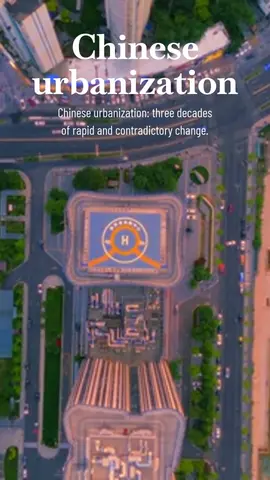
The book's method is visual and quantitative comparison. Each city is presented with the same indicators drawn at the same scale: population density by district, modal split, income, emissions, shape of the urban footprint, growth of the metropolitan region. That cartography makes visible that London and New York, with medium densities, move their people by public transport and on foot; that Mexico City and Johannesburg sprawl into low-density peripheries where the poor travel for hours; that Shanghai builds at an unprecedented pace and that Berlin, with a stable population, manages emptiness. The editors argue that urban form is a political decision with measurable consequences.
Inequality, informality, transport and climate: the project's themes
The essays accompanying the data, by Saskia Sassen, Richard Sennett, Edgar Pieterse and others, develop the project's themes: the inequality growing within the most prosperous cities, the informality that houses a growing share of the world's urban population, transport as a question of justice, climate change as a challenge cities can face better than states, and metropolitan governance as an unsolved problem, because the real city overflows administrative boundaries. Burdett and Sudjic insist that compact, dense, well-connected cities are at once more equitable and more sustainable.
From The Endless City to Living in the Endless City and C40
The Urban Age project continued with conferences in Mumbai, São Paulo, Istanbul and other cities, and produced in 2011 a second volume, Living in the Endless City, focused on the Global South. Its influence shows in the urban sustainability agenda of the following decade, from UN-Habitat reports to the 2016 New Urban Agenda, and in the training of a generation of urban managers who learned to compare cities with data. The network of mayors the project gathered anticipated the city diplomacy of organisations such as C40.
Criticism: the view from above and the elites' agenda
Criticism of the book focuses on its gaze. It is reproached for a view from above, that of the aeroplane and the map, which sees forms and flows but not the life of neighbourhoods; a confidence in design and management that leaves power and conflict in the background; and a selection of cities and voices, funded by a bank, that reflects the agenda of global urban elites. Scholars such as Jennifer Robinson and Ananya Roy called, against that comparative cartography, for an urban theory made from ordinary cities and from their inhabitants.
With those limits, The Endless City remains one of the best visual introductions to the contemporary global city. Its contribution is to have made comparable what seemed incomparable, and to have shown with maps what theory asserted: that density, transport and urban form decide how much a city emits, how long its people take to reach work and how its wealth is shared. The endless city of the title is a warning and a programme: urbanization will not stop, and the question is what form it will be given.
Frequently asked questions
What is The Endless City about?
It is the 2007 volume in which Ricky Burdett and Deyan Sudjic summarised the London School of Economics' Urban Age project, comparing with maps, data and essays New York, Shanghai, London, Mexico City, Johannesburg and Berlin to show how urban form decides the planet's future.
What criticism has The Endless City received?
A view from above that sees forms and flows but not neighbourhood life, a confidence in design that leaves power and conflict in the background, and a selection of cities and voices funded by a bank that reflects the agenda of global urban elites.