Saskia Sassen
1947
Dutch-American sociologist who identified the cities where the world economy is directed, and the price they pay inside.
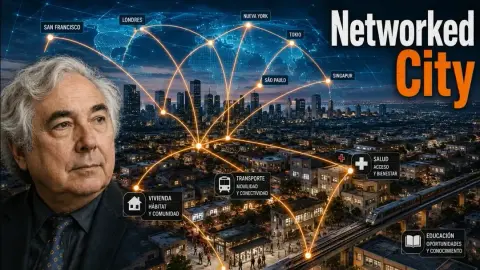
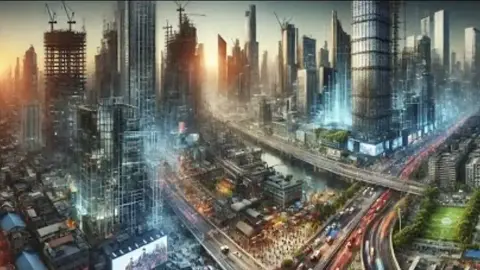
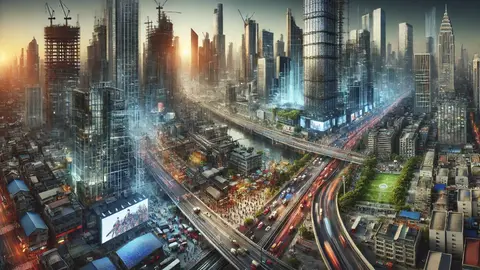
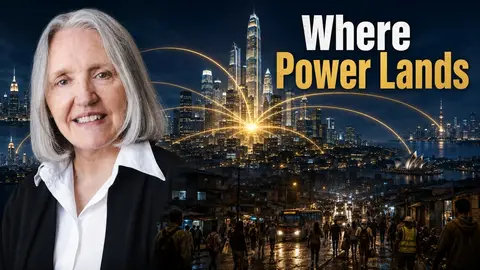
Sassen coined «global city» on noticing that the more production disperses across the planet, the more its direction concentrates in a few places. New York, London and Tokyo stand out not for manufacturing but for housing the finance, the legal and accounting services and the decisions that order everything else.
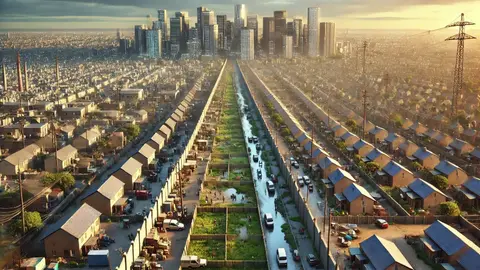
Her second contribution is what happens inside those cities. The same economy that fills the office towers needs them cleaned, guarded and fed by precarious labour. Hence her idea of «expulsions»: people who are not outside the system, but have been thrown out of it.
Born in The Hague in 1947, raised in Buenos Aires and trained in France, Italy and the United States, Sassen is professor of sociology at Columbia University and was previously at Chicago. The Mobility of Labor and Capital (1988) studied how foreign investment produces the migrations that later reach rich cities, and The Global City (1991) formulated the thesis that made her famous: the more production disperses across the world, the more the command functions, finance and advanced services that coordinate it concentrate in a few cities, New York, London and Tokyo.
Cities in a World Economy (1994) summarised that thesis for a wide public and Expulsions (2014) took it further: advanced globalisation no longer only incorporates but expels people, firms and territories out of the system. Territory, Authority, Rights (2006) is her major theoretical work. Awarded the Prince of Asturias Prize for Social Sciences in 2013, she has been criticised for her emphasis on Northern cities, against which Jennifer Robinson set ordinary cities; her concept still structures the field.
Videos on Saskia Sassen (5)
- Urban geopolitics
Why Cities Are the Key Nodes of Globalization: Saskia Sassen
Saskia Sassen explains why a dispersed economy needs global cities to coordinate it: command functions, social…
Saskia Sassen 3 min read - Urban geopolitics
Global Cities According to Saskia Sassen: Power and Inequality
Cities in a World Economy (1994) by Saskia Sassen explains why the global economy is run from a few cities and what…
Saskia Sassen 3 min read - Urban geopolitics
Saskia Sassen: what makes a global city global
New York, London and Tokyo concentrate capital, information and decisions. Saskia Sassen explains what links them…
Saskia Sassen 2 min read - Urban geopolitics
Saskia Sassen: migration, inequality and the global city
How Saskia Sassen explains the global city: financial concentration, international migration, urban inequality and…
Saskia Sassen 2 min read - Urban geopolitics
Saskia Sassen: Cities in a World Economy
A summary of Saskia Sassen's Cities in a World Economy: why a handful of cities concentrate command over the global…
Saskia Sassen 2 min read




Where Saskia Sassen is cited (12)
- Urban economy
Castells: From Collective Consumption to the Space of Flows
Manuel Castells's urban thought moved from collective consumption and urban social movements to the network society…
Manuel Castells 3 min read - Urban geopolitics
Michael Peter Smith: Transnational Urbanism and Global Cities
Michael Peter Smith argues in Transnational Urbanism that globalisation is made by migrants and networks in…
Michael Peter Smith 2 min read - Public space
John Friedmann: Transactive Planning and Community Participation
John Friedmann proposed transactive planning: a dialogue between technical and community knowledge.
John Friedmann 3 min read - Urban geopolitics
Hong Kong as a Global City: Stephen Chiu and Tai-lok Lui
Stephen Chiu and Tai-lok Lui explain how Hong Kong went from colony to global financial centre and what that means…
Stephen Chiu 3 min read - Urban geopolitics
Shanghai as a Global City: From the Concessions to Pudong
Shanghai went from an open port in 1843 to a cosmopolitan metropolis and, after 1990, to a state-directed global…
3 min read - Urban geopolitics
The Urban Condition: The Fragmented Metropolis of Globalisation
The Urban Condition (1999) by the Ghent Urban Studies Team describes the dispersed metropolis of globalisation and…
3 min read - Urban geopolitics
The Endless City by Burdett and Sudjic: The Global City Compared
The Endless City (2007) by Ricky Burdett and Deyan Sudjic compares with maps and data New York, Shanghai, London,…
3 min read - Urban geopolitics
Peripheral Global Cities: Subordinate Integration and Exclusion
How the cities of the Global South are inserted into the world economy in a subordinate way: Grant and Nijman's…
3 min read - Urban economy
Touristification: Zukin, Sassen and the city for tourists
What touristification is and how Sharon Zukin (Naked City) and Saskia Sassen explain it: authenticity turned into a…
2 min read - Urban geopolitics
Socio-Spatial Segregation: Wacquant, Massey and Sassen
Socio-spatial segregation sorts rich and poor into separate neighborhoods. How Loïc Wacquant, Douglas Massey and…
2 min read - Urban geopolitics
Jennifer Robinson and Ordinary Cities: Urban Theory from the South
Ordinary Cities (2006) by Jennifer Robinson holds that all cities are ordinary and sources of theory. Her critique…
Jennifer Robinson 3 min read - Public space
Citizen Participation in Urban Governance: Keys and Limits
Citizen participation decides who shapes the city. What Neil Brenner and Saskia Sassen explain, which mechanisms…
2 min read