Key points
- The smart city instruments infrastructure and processes real-time data to run services.
- Mobility as a service, data-driven traffic management and smart charging are the three changes in transport.
- Without data as a public good and analogue back-up services, the 4.0 city surveils and excludes.
Industry 4.0 is the fourth industrial revolution, the term coined at the Hannover fair in 2011 and popularised by Klaus Schwab in 2016 to describe the fusion of physical and digital systems: connected sensors, artificial intelligence, robotics, cloud computing and additive manufacturing working as a single system. Born in the factory, that logic has leapt to the city. Self-regulating power grids, traffic lights that learn from traffic, bus fleets managed by algorithms and digital twins of whole neighbourhoods are the urban translation of Industry 4.0, and mobility is the field where its effects are felt first.
Smart cities: infrastructure with sensors and data
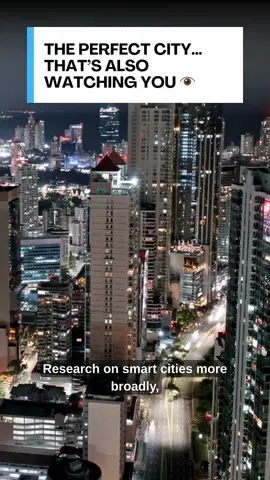
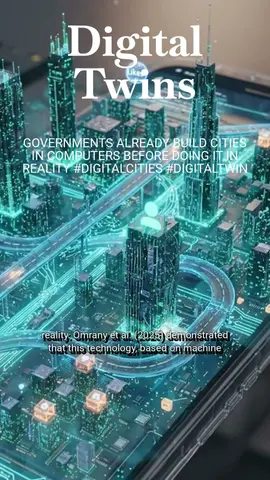
The vehicle that brings these technologies to the city is the smart city. It consists of instrumenting urban infrastructure, water and electricity meters, parking sensors, cameras, air quality stations, and processing their data in real time to run services better. Barcelona cut irrigation water use with humidity sensors, Copenhagen adjusts its traffic lights to give priority to bicycles and buses, and Singapore maintains a digital twin of the whole island to simulate floods, shade and pedestrian flows before building. The declared aim is to do more with fewer resources and cut emissions.
Urban mobility 4.0: data, mobility as a service and electromobility
In mobility, Industry 4.0 produces three changes. First, traffic and public transport management with real-time data, which allows dynamic frequencies, accurate passenger information and signal priority. Second, mobility as a service, which integrates metro, bus, bicycle and car sharing into a single app and a single payment, as Helsinki did with Whim from 2016. Third, connected electromobility: electric vehicles with smart charging and vehicle-to-grid technology, which returns energy from batteries to the grid at peak hours and turns every parked car into a small power store. Autonomous vehicles, by contrast, remain in testing and their effects on congestion are uncertain.
Urban production: the factory returns to the neighbourhood
Urban production is the other promise. Additive manufacturing, robotics and digital workshops make it possible to place small production units in the city, close to customers, instead of in distant industrial estates: fabrication labs, micro-factories for food or spare parts, vertical farming. Amsterdam, Barcelona and Detroit are exploring how to bring industry back to neighbourhoods without noise or pollution, with local jobs and less freight transport. It reverses the twentieth-century zoning that expelled production from the centre, and it opens an opportunity for the circular economy.
Risks: surveillance, energy use and the digital divide
The risks are as real as the promises. The instrumented city is a surveilled city, and the question of who owns the data and what they use it for decides whether technology serves the citizen or turns them into a product: Sidewalk Labs' project in Toronto was cancelled in 2020 after years of neighbourhood opposition over the privatisation of urban data. Data centres and connected devices consume energy and critical materials. And the digital divide leaves out those without a phone, a bank account or the skills, precisely the users who depend most on public transport. A just urban Industry 4.0 requires data as a public good, municipal technological sovereignty and analogue back-up services.
Industry 4.0 will not make better cities on its own. Sensors and algorithms optimise what they are asked to optimise, and if the goal is to move more cars, they will move more cars. If the goal is to cut emissions, shorten trips and guarantee access for all, the technology is a powerful tool. The decision remains political and urbanistic: what city is wanted, and only then which technology helps to achieve it.
Frequently asked questions
What is Industry 4.0 applied to cities?
It is the integration of connected sensors, artificial intelligence, cloud computing and cyber-physical systems into urban infrastructure to manage energy, water, transport and waste in real time, and to place digital production in neighbourhoods.
What is vehicle-to-grid technology?
It is a system that lets connected electric vehicles return energy from their batteries to the grid at times of high demand, turning every parked car into a small power store that stabilises the urban grid.