Key points
- Sassen, a sociologist born in the Netherlands, formulated the global city concept in The Global City (1991).
- Globalisation concentrates financial, corporate and technological activity in a handful of cities.
- Global cities attract international migration, both skilled and informal.
Saskia Sassen, a sociologist born in the Netherlands in 1947, raised in Buenos Aires and a professor at Columbia University, is one of the most influential voices in urban and global studies. Her book The Global City (1991) pioneered the analysis of globalisation's impact on cities: some — New York, London, Tokyo — have become strategic nodes that manage and distribute the capital, information and advanced services of the world economy. This piece focuses on three consequences of that position: the migration they attract, the inequality they produce and the role of technology.
Globalisation reshapes the city
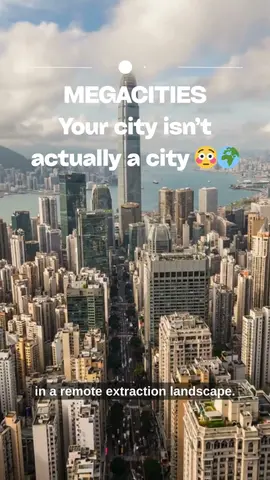
Globalisation has reconfigured the structure of cities. With the concentration of financial, corporate and technological activity, global cities emerge as nerve centres directing flows of capital and goods on a world scale and become centres of power. But that same concentration produces new tensions: although they attract major investment and international talent, they generate sharper economic and social polarisation, in which global capital accumulates in few hands while many people, above all less skilled workers, are pushed to the margins.
Migration: global cities as destination
Migration is another pillar of her analysis. Global cities are key destinations for international migration, both of highly skilled professionals and of informal workers and economic migrants. That migration answers the labour demand these economies generate — someone has to clean the offices, care for the children and serve the tables of the financial city — and at the same time worsens internal inequality. Global cities offer opportunity to some and exclusion to others, especially to migrants who end up in poorly paid, precarious jobs, pushed out of their countries by global processes of deindustrialisation and economic restructuring.
Inequality and exclusion
Urban inequality grows with centrality. As global cities become crucial nodes of the world economy, the gap between the richest and poorest sectors widens. The concentration of wealth in certain areas drives gentrification, in which long-standing residents are displaced by rising housing prices. Sassen criticises urban policies that, designed to attract global capital, neglect the most vulnerable sectors and deepen social exclusion.
Technology and digitalisation
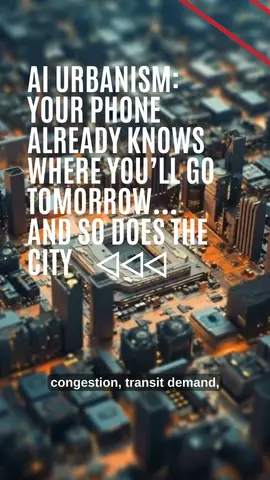
Sassen pays particular attention to how technology and digitalisation have changed the nature of global cities. New technologies allow instant connection with anywhere, but they do not eliminate the importance of the physical city: on the contrary, global cities matter more as centres of power because of their capacity to manage and control those digital networks. Their technological infrastructure sustains the flow of information and reinforces their role in the world economy. Geography does not vanish with the network; it concentrates.
Sassen's contributions are fundamental to understanding the role of cities in the era of globalisation: critical nodes of the world economy that generate, at the same time, deep inequalities and exclusions. Her work asks us to analyse cities from a global perspective and to attend to how flows of capital, migration and technology reshape not only urban economies but the lives of those who inhabit them.
Frequently asked questions
How are global cities and migration related?
According to Sassen, global cities are key destinations for international migration, both of highly skilled professionals and of informal workers. That migration is linked to global processes of deindustrialisation and economic restructuring in the migrants' countries of origin.
Why are global cities more unequal?
Because in becoming nodes of the world economy they concentrate very well-paid jobs alongside a large demand for precarious services. Sassen criticises urban policies designed to attract global capital for neglecting the most vulnerable populations and deepening exclusion.