Key points
- Hong Kong was an entrepôt, a manufacturing power and from the 1980s a financial centre, adapting to what China allowed.
- The global city needs reliable institutions and free information, and that need collides with political integration.
- One of the richest and most unequal places on earth: the dearest housing, cage homes and nearly half the population in public housing.
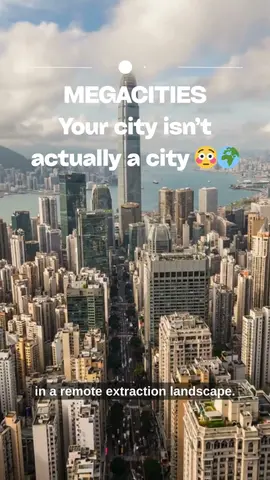
Hong Kong as a global city is the subject of Hong Kong: Becoming a Chinese Global City (2009), in which the sociologist Stephen Chiu, of the Chinese University of Hong Kong, and Tai-lok Lui explained how a British colony became one of the world's financial centres and what it means to be one under Chinese sovereignty. Their thesis is that Hong Kong was global before it was Chinese and must now be both at once: a city whose prosperity depends on its connection with international markets and whose politics depends on Beijing, in a balance, one country two systems, designed by the 1997 transition and tested by the two decades since.
From entrepôt to factory to financial centre: three stages
Chiu and Lui reconstruct three economic stages. After 1841, Hong Kong was an entrepôt for trade with China, a port without industry. The refugees of the 1949 revolution, with capital and labour from Shanghai and Canton, turned it in the 1950s and 1960s into a manufacturing power in textiles, plastics and electronics. And from the 1980s, with Deng Xiaoping's opening, the factories crossed the border to the Pearl River Delta and the city specialised in finance, professional services and logistics, Saskia Sassen's global city applied to the Asian case. Each stage, they show, was an adaptation to what China allowed or needed.
One country, two systems: identity, protests and the security law
Politics is the second dimension. The Joint Declaration of 1984 and the Basic Law promised fifty years of autonomy, a capitalist system and freedoms, and Chiu and Lui analyse how that promise produced a Hong Kong identity distinct from the mainland, expressed in the 2003 protests against the security law, in the Umbrella Movement of 2014 for universal suffrage and, after their book, in the mobilisations of 2019 and the national security law of 2020 that ended them. The global city, they argue, needs reliable institutions and free information, and that need collides with political integration.
Wealth and inequality: public land, expensive housing and cage homes
Inequality is the third. Hong Kong is one of the world's richest economies and one of the most unequal, with a Gini coefficient among the highest of advanced economies, the most expensive housing market on the planet for years running, cage homes and subdivided flats for the poorest and close to half the population in public or subsidised housing. The authors show that the low-tax model is financed by selling public land to developers, which gives the government a direct interest in high prices, and that the polarisation between financial professionals and service workers is the mark of the global city.
Culture, Shenzhen and the Greater Bay Area
Culture and geography complete the picture. Hong Kong was for decades the capital of Chinese-language cinema and popular music and a meeting point between East and West that gave it a cosmopolitan character; today it competes with Shenzhen, whose output overtook Hong Kong's in 2018, and with Shanghai, and its future is played out in the integration into the Greater Bay Area that Beijing has promoted since 2017. Chiu and Lui anticipated the question that now dominates: whether a city can remain global when its institutional singularity shrinks.
Hong Kong's lesson is that global city status is neither permanent nor merely economic. It depends on institutions, freedoms and connection, and it can erode while the skyscrapers still stand. For planning, it is the case that shows at once the power of a port city turned financial node and the costs of that model, unaffordable housing, extreme inequality and political dependence, and that forces the question of for whom a global city is global.
Frequently asked questions
How did Hong Kong become a global city?
In three stages: an entrepôt for trade with China from 1841, a manufacturing power with the refugees and capital of 1949 in the 1950s and 1960s, and a financial and service centre from the 1980s, when factories crossed to the Pearl River Delta with Deng Xiaoping's opening.
What tensions does Stephen Chiu analyse in Hong Kong?
The tension between globality, which requires reliable institutions and freedoms, and political integration into China under one country two systems, expressed in the protests of 2003, 2014 and 2019, and the extreme inequality of an economy financed by public land sales that produces the world's most expensive housing.