Key points
- Sassen explains the strategic role a few major cities play in the globalised economy.
- Those cities host multinational headquarters, financial markets and specialised services that centralise decisions.
- Concentration produces polarisation: zones of extreme prosperity next to areas of precarity and exclusion.
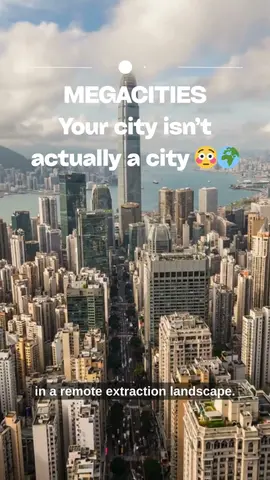
Cities in a World Economy (1994), by Saskia Sassen, is the book that brought the thesis of The Global City to a wide audience: in the globalised economy, major cities have stopped being centres of local production or exchange and have become critical nodes in the global networks of economic, financial and technological power. They are epicentres for managing and coordinating flows of capital, information and talent, and a few — New York, London, Tokyo — act as command platforms for the world economy.
Where the global economy is run from
Those cities host the headquarters of multinational corporations, financial markets and specialised service firms, which lets them centralise decision-making and the management of global operations. They do not only drive local economic growth: they connect and ease international economic integration and consolidate their role as intermediaries in the flow of goods, services and capital. The more production disperses across the world, the more the function of directing it concentrates in them.
Polarisation inside the city
A key aspect of the analysis is how globalisation has deepened the internal inequalities of these cities. Part of the population gains access to very well-paid jobs in finance, technology and business services; another large part is trapped in low-wage jobs, often in services such as cleaning, hospitality or transport, which are precisely what sustains the first. That division produces marked socioeconomic polarisation: zones of extreme prosperity and areas of precarity and exclusion within the same city.
Space at the service of capital
Sassen also attends to the transformation of urban space that accompanies the rise of the global city. Space is reconfigured to answer the needs of capital: skyscrapers, financial districts, new transport infrastructure at the service of corporate elites. That process displaces local communities, above all in areas undergoing gentrification and sharp rises in housing prices, and turns the physical form of the city into a map of who runs it.
Laboratories of financial innovation
Beyond concentrating economic power, global cities work as laboratories of technological and financial innovation, where new forms of work, commerce and services are tried out. As they evolve, labour and social dynamics change with them, and that constantly shifting environment shapes not only the global economy but the daily lives of millions of people who will never set foot on a trading floor.
Cities in a World Economy offers an understanding of the interrelation between urbanisation and globalisation: major cities are essential actors in shaping the world economic system and, at the same time, the stage for the social tensions their transformation produces. It remains a reference for urban studies, globalisation and the economic impact of cities in an ever more interconnected world.
Frequently asked questions
What does Cities in a World Economy argue?
That globalisation does not dissolve place but concentrates it: the command functions of the world economy — headquarters, finance, advanced services — settle in a few cities, which gain power while the rest are subordinated. The book (first edition 1994) develops for a wider audience the thesis of The Global City (1991).
What is the socioeconomic polarisation of the global city?
The coexistence, within the same city, of very well-paid jobs tied to finance and advanced services with a mass of precarious work that sustains them. Sassen shows this gap is not a side effect but part of how the global city works.