Key points
- Shanghai was global before China: in the 1930s it was the fifth city on the planet thanks to the foreign concessions.
- Pudong rose from nothing after 1990 on leased public land, free zones and infrastructure at state scale.
- Demolished shikumen, unregistered migrants and surveillance are the price of the directed global city.
Shanghai as a global city is the story of how a river port opened to foreign trade in 1843 became, in two stages separated by half a century of withdrawal, one of the world's financial, logistics and cultural centres. The first stage was that of the foreign concessions, from 1843 to 1943, when the Bund and the International Settlement made Shanghai the most cosmopolitan metropolis in Asia; the second began in 1990 with the opening of Pudong and has produced in three decades the city of skyscrapers, metro lines and container ports that now rivals New York and London. Historians such as Jeffrey Wasserstrom, in Global Shanghai, 1850-2010 (2009), and Marie-Claire Bergère, in Shanghai: China's Gateway to Modernity (2009), have shown that both stages are a single history.
The concessions: global before China, 1843-1943
Concession-era Shanghai was global before China was. After the First Opium War, the British, French and Americans obtained territories with their own laws where banks, shipping companies, newspapers and factories settled, and to which Chinese migrants fleeing wars and famines, Russian and Jewish refugees and adventurers from around the world arrived. In the 1930s it was the fifth city on the planet, the capital of Asian cinema and fashion and also of industrial exploitation, prostitution and organised crime. That duality, modernity and extreme inequality, is the thread Bergère follows to the present.
Socialist closure and the opening of Pudong from 1990
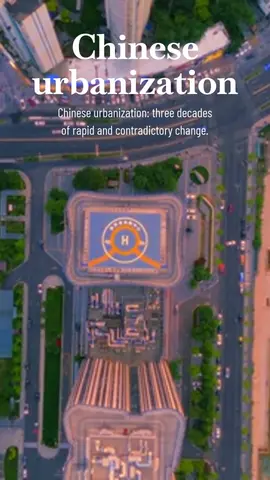
The revolution of 1949 closed the city to the world. Shanghai remained China's largest industrial centre, but the state extracted its profits to finance the development of the interior and barely invested in it for forty years; its population lived crowded in colonial-era buildings. The turn came with Deng Xiaoping's reforms: in 1990 the central government declared Pudong, the eastern bank of the Huangpu River, a development zone, and within a decade a financial district rose from nothing, with the Oriental Pearl Tower, the international airport, the deep-water port of Yangshan and a metro network that is now among the most extensive in the world.
State and market: the model of directed urbanism
The Pudong model combines state and market in its own way. The municipal government controls the land, leases it to developers and uses the revenue to finance infrastructure at a scale no Western city could afford; it attracts foreign company headquarters with free zones and tax advantages; and it plans on horizons of decades. The result is a state-directed global city, which Wasserstrom describes as the synthesis of the two Shanghais: the cosmopolitan city of the concessions and the socialist city of central control. Researchers such as Fulong Wu have studied how that state urbanism produces at once iconic towers and mass demolitions of traditional neighbourhoods.
Costs: demolished shikumen, unregistered migrants and surveillance
The costs are visible. The shikumen, the courtyard houses of the old city, have mostly been demolished, and those that remain, as in Xintiandi, have been turned into commercial stage sets. Millions of migrant workers without urban residence registration build and serve the city without full access to schools and healthcare. Inequality between the skyscraper centre and the peripheries of housing blocks is among the highest in China, and digital surveillance makes Shanghai a laboratory of the controlled city. The Chinese global city is prosperous and orderly at a price its poorest residents pay in silence.
Shanghai teaches that urban globality has no single recipe. Against the market-driven global city Saskia Sassen described, Shanghai shows a state-directed version, able to build in thirty years what other cities took a century to build, and subject to the same tensions of inequality, displacement and control. For planning, it is the case that forces the question of what is gained and what is lost when the capacity to plan has no democratic limits.
Frequently asked questions
How did Shanghai become a global city?
In two stages: as a port of foreign concessions between 1843 and 1943, when it was Asia's most cosmopolitan metropolis, and from 1990, when the central government opened Pudong and built in three decades a financial, port and transport centre that rivals New York and London.
What is the Pudong model?
It is a state-directed urbanism in which the municipal government controls land, leases it to developers, finances infrastructure with that revenue, attracts firms with free zones and plans over decades, producing iconic towers as well as mass demolitions of traditional neighbourhoods.